Trump Threatens NATO Exit Over Iran War Snub: ‘Paper Tiger’
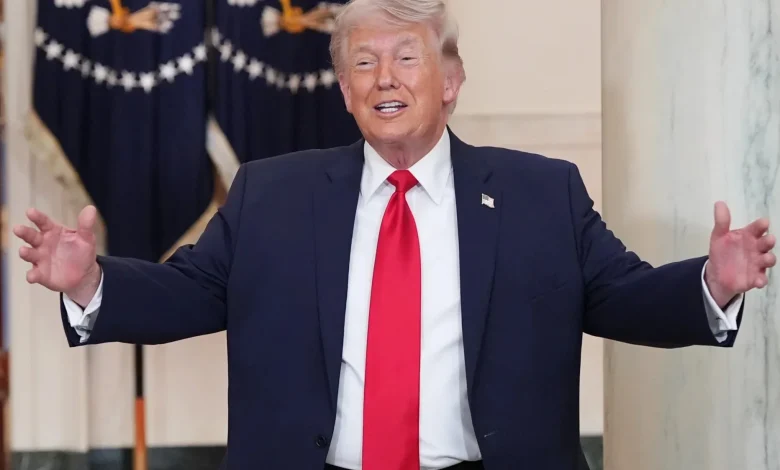
Trump has officially threatened to pull the United States out of the North Atlantic Treaty Organization (NATO), triggering an unprecedented geopolitical crisis that threatens to unravel over seven decades of transatlantic security protocols. Speaking forcefully from the Oval Office early Wednesday morning on April 1, 2026, the President lambasted the Western military coalition, explicitly labeling it a “paper tiger” due to its collective refusal to militarily engage in the escalating United States war with Iran. This stark declaration marks a historical turning point in global diplomacy and international security, fundamentally challenging the post-World War II order and plunging European capitals into immediate states of emergency planning.
The Paper Tiger Ultimatum: Why the Administration is Furious
The frustration within the current administration has been simmering for months, primarily driven by what the White House perceives as an agonizing lack of reciprocal loyalty from European nations. When the United States found itself drawn into a direct and grueling conflict with Iran earlier this year, expectations in Washington were that NATO allies would step up, offering not just logistical support, but tangible military intervention. Instead, major European powers opted for defensive posturing and diplomatic caution, leaving the U.S. military to shoulder the operational burden of the Middle Eastern theater almost entirely alone.
By using the term “paper tiger,” the President is deliberately undermining the deterrence value of NATO, suggesting that its expansive treaties and massive bureaucratic infrastructure in Brussels amount to nothing more than an illusion of strength. The administration argues that an alliance which only operates when European borders are threatened, but abandons its primary benefactor during overseas conflicts, is not a mutual defense pact but a unilateral subsidy. This rhetoric has resonated deeply with domestic “America First” proponents, who have long criticized the financial and military disproportion between the U.S. and its European counterparts.
Assessing the Failure to Invoke Article 5
The core of the dispute revolves around the interpretation of NATO’s collective defense provisions, specifically Article 5 of the Washington Treaty. The U.S. administration indirectly pushed for an interpretation that would classify Iranian cyber-attacks on U.S. critical infrastructure and strikes on U.S. bases in the Middle East as an armed attack on the homeland, thereby necessitating a unified NATO response. However, NATO’s governing council, led by France and Germany, firmly resisted this classification. They maintained that the conflict’s origins and geographic center remained outside the specific Euro-Atlantic area defined by the treaty, making an Article 5 invocation legally unjustifiable. This bureaucratic stonewalling was perceived by the U.S. executive branch as an unforgivable betrayal, setting the stage for today’s explosive withdrawal threat.
Geopolitical Fallout: European Allies React to the Threat
The immediate reaction across Europe has been one of profound shock mixed with rapid, defensive scrambling. In Paris, the long-standing argument for “strategic autonomy” is suddenly no longer a philosophical debate but an urgent operational necessity. French leadership has already called for an emergency summit of the European Union’s defense ministers to draft contingency plans for a continent devoid of the American nuclear umbrella and logistical backbone. Meanwhile, in Berlin, the government is facing intense domestic pressure to radically accelerate its defense spending, a process that has been notoriously sluggish despite earlier promises of a “Zeitenwende” or historical turning point.
Eastern flank nations, particularly Poland and the Baltic states, view this development as an existential nightmare. For decades, they have relied on the explicit guarantee of American military might to deter Russian aggression. The prospect of the U.S. packing up its armor, air defense systems, and nuclear deterrents leaves these border states highly vulnerable. Frantic diplomatic backchannels are currently open between Warsaw, Washington, and London, desperately seeking to salvage bilateral security guarantees even if the broader NATO framework collapses.
The Financial and Military Implications for Europe
Should the withdrawal materialize, the financial implications for Europe would be staggering. The United States currently accounts for nearly 70% of total NATO defense expenditures. European nations would need to collectively inject hundreds of billions of euros into their defense budgets almost overnight to replace U.S. intelligence, surveillance, reconnaissance (ISR), strategic airlift, and air-to-air refueling capabilities. The table below illustrates the stark contrast in responses and the precarious positions of key NATO members amid this crisis.
| NATO Member State | Stance on U.S.-Iran Conflict | Current Defense Spending Status | Reaction to U.S. Withdrawal Threat |
|---|---|---|---|
| Germany | Strictly Neutral; focused on diplomacy | Struggling to maintain 2% of GDP | Condemns the ultimatum; urges immediate dialogue |
| France | Humanitarian Support Only | Above 2%; heavily invested in EU autonomy | Accelerating plans for an independent European Army |
| United Kingdom | Logistical and Intelligence Assistance | Above 2%; strong bilateral U.S. ties | Attempting emergency mediation to save the alliance |
| Poland | Strongly pro-U.S.; offered limited assets | Exceeds 4% of GDP; massive military buildup | Seeking bilateral security treaties directly with Washington |
The Underlying Cause: The 2026 U.S.-Iran Conflict Escalation
To fully grasp the magnitude of the “paper tiger” accusation, one must examine the fierce realities of the 2026 conflict with Iran. What began as skirmishes in the Red Sea and proxy proxy engagements rapidly spiraled into a direct, high-intensity conflict. The U.S. military has suffered casualties, severe supply chain disruptions, and relentless asymmetric attacks. The threat landscape has broadened terrifyingly, as seen when the IRGC declares U.S., Israeli universities targets, pushing the war far beyond traditional battlefields and into the realm of global civilian terror threats.
Furthermore, the physical destruction in the Middle East has heavily taxed U.S. resources. Events such as the Iranian missile barrage strikes Beersheba chemical plant highlighted the severe environmental and humanitarian costs of the conflict, demanding vast amounts of U.S. strategic attention and defensive deployments. The administration feels that Europe, which relies heavily on Middle Eastern energy flows, is free-riding on American blood and treasure while adopting a morally superior posture of neutrality from the sidelines.
A Timeline of Unanswered Calls for Coalition Support
Since January 2026, the State Department and the Pentagon have issued no fewer than five formal requests to NATO headquarters for coalition support. These requests ranged from maritime task forces to secure the Strait of Hormuz, to Patriot missile battery deployments to protect staging grounds in allied Middle Eastern nations. Each request was met with bureaucratic delays, caveats, and ultimately, polite refusals. The narrative in Washington quickly solidified: NATO is eager to consume U.S. security guarantees but completely unwilling to share the risks of modern global conflict.
Can the U.S. President Legally Withdraw from NATO?
The threat to leave the alliance instantly reignited a fiery constitutional debate over the division of war powers and treaty obligations in the United States. While the President directs foreign policy, the withdrawal from ratified treaties presents a complex legal gray area. Historically, executives have unilaterally withdrawn from treaties, but NATO represents an entirely different scale of legal and strategic integration.
Congressional Pushback and Constitutional Debates
Lawmakers on Capitol Hill are already drafting emergency resolutions to block any executive action. A provision buried within the 2024 National Defense Authorization Act explicitly prohibited the President from withdrawing the United States from NATO without the approval of two-thirds of the Senate or an act of Congress. However, White House legal counsel has signaled they may challenge the constitutionality of that provision, arguing it unlawfully infringes upon the President’s Article II powers as Commander in Chief. If the administration moves forward, this will inevitably result in a historic, fast-tracked Supreme Court showdown, paralyzed military command structures, and severe internal political chaos.
Global Realignment: Who Benefits from a Fractured Alliance?
The mere vocalization of this threat serves as an immense strategic victory for adversarial powers in Moscow and Beijing. A fragmented West has been the primary geopolitical objective of these capitals for decades. Without the cohesive military threat of NATO, Russia may feel emboldened to push further against its neighbors, secure in the knowledge that European forces lack the integrated command and heavy logistics previously provided by the Pentagon.
Concurrently, the U.S. administration is making a calculated bet that its future lies not in the Atlantic, but in the Indo-Pacific. By unburdening itself from European security guarantees, the U.S. seeks to pivot all available military and economic resources to counter the rise of China. This strategic shift was heavily foreshadowed during the recent Donald Trump Sanae Takaichi meeting, where the focus was entirely on bolstering the “Quad” and Asian bilateral alliances, effectively treating European security as a secondary, obsolete concern.
Economic Shockwaves: Defense Contractors and Markets React
The global financial markets reacted violently to the Wednesday morning announcement. The Euro took a steep plunge against the Dollar, reflecting deep anxieties about the stability of the European project. European defense contractor stocks, such as Rheinmetall, BAE Systems, and Thales, surged on the expectation of massive domestic armament orders, while U.S. defense primes saw volatile trading as investors weighed the loss of European NATO contracts against increased U.S. unilateral defense spending for the ongoing Iran war.
Evaluating Future Transatlantic Trade Agreements
Beyond defense stocks, the threat to dissolve the security umbrella jeopardizes trillions of dollars in transatlantic trade. The stability that has allowed European and American markets to seamlessly integrate is deeply tied to the mutual trust forged within NATO. Trade officials warn that if the security partnership fractures, trade wars, tariffs, and severe economic protectionism will swiftly follow, plunging the Western economic bloc into a recession right when it needs economic fortitude to weather the ongoing Middle Eastern energy crises.
The Path Forward: Will the Alliance Survive 2026?
The coming weeks will be the most perilous in the history of the transatlantic relationship. The “paper tiger” designation has wounded European pride, yet exposed an undeniable truth regarding military dependence. Behind closed doors, European diplomats are racing to draft a “grand bargain” to present to Washington—a package that may include unprecedented financial contributions to the U.S. war effort in Iran, severe sanctions, or limited expeditionary support, simply to pacify the administration and keep the U.S. tethered to Europe.
Meanwhile, global observers are closely watching the trajectory of the Middle East conflict. The potential for a Iran-Israel war ceasefire or a broader diplomatic off-ramp could theoretically de-escalate the tensions between Washington and Brussels. If the immediate pressure of the war subsides, the administration might walk back the withdrawal threat, claiming its hardball tactics successfully forced Europe to reform. However, if the war drags on and Europe remains paralyzed, the United States may indeed walk away, bringing the curtains down on the greatest military alliance in modern history.