National Hurricane Center: 2026 AI Forecasts and News
National Hurricane Center (NHC) experts have officially rolled out their most ambitious and technologically advanced operational framework for the 2026 hurricane season, establishing a new paradigm in global meteorological science. As climate volatility continues to challenge traditional forecasting models, the Miami-based institution has pivoted toward an integrated, multidisciplinary approach that combines advanced atmospheric physics, deep machine learning algorithms, and real-time oceanic drone telemetry. The sheer scale of these updates promises to drastically reduce the margin of error in tracking rapid intensification events, a phenomenon that has historically caught coastal communities off guard and led to catastrophic economic and human losses. In an era where extreme weather events are increasingly the norm rather than the exception, the NHC stands as the primary bulwark of public safety, disseminating critical data that dictates emergency response protocols across the Western Hemisphere.
The Dawn of a New Forecasting Era
The dawn of 2026 brings an unprecedented transformation to how meteorological anomalies are tracked, analyzed, and communicated. Historically, tropical cyclone forecasting relied heavily on statistical-dynamical models that computed variables based on historical climatology and current atmospheric conditions. However, these legacy systems occasionally struggled to keep pace with the hyper-accelerated nature of modern storm development. Today, the operational blueprint has been thoroughly overhauled. The introduction of the Hurricane Analysis and Forecast System (HAFS) version 3.0 represents a quantum leap in computational meteorology. By leveraging exascale computing capabilities, meteorologists can now simulate storm environments at incredibly high resolutions, observing localized wind shear, moisture boundaries, and barometric fluctuations down to a single-kilometer grid. This granular perspective allows for the detection of subtle eyewall replacement cycles and inner-core dynamics that dictate a storm’s ultimate destructive potential. Furthermore, these technological strides reflect a broader initiative to safeguard vulnerable coastal economies against unprecedented environmental shifts, aligning seamlessly with modern strategies of ecological and financial resilience. The massive investment in predictive infrastructure echoes the principles outlined in comprehensive sustainability frameworks, such as the Mark Carney climate finance blueprint, which emphasizes the critical intersection of precise climate data and global economic stability.
Integration of Artificial Intelligence in Weather Models
Perhaps the most seismic shift in the forecasting landscape is the aggressive integration of Artificial Intelligence (AI) and Machine Learning (ML) into the daily operational workflow of atmospheric scientists. Unlike traditional physics-based models that require immense computational time to solve complex fluid dynamics equations, AI-driven models recognize vast pattern architectures from decades of satellite imagery and historical storm tracks in mere seconds. This year, proprietary neural networks have been trained on over a petabyte of historical meteorological data, enabling them to predict rapid intensification cycles with an accuracy rate never before documented in scientific literature. The cognitive leaps achieved by these atmospheric AI systems draw fascinating parallels to the groundbreaking AI evolution seen in generalized platforms like ChatGPT, demonstrating how advanced algorithmic processing is revolutionizing distinct scientific disciplines. These intelligent models do not replace the indispensable human element of the forecaster; rather, they serve as a hyper-efficient advisory tool that flags anomalous data points, effectively eliminating the “blind spots” that previously plagued early-stage storm tracking. As a result, the lead time for severe wind warnings and storm surge watches has been extended, granting emergency managers crucial additional hours to coordinate complex evacuation protocols.
Key Technological Innovations for 2026
The technological arsenal deployed for the current season is nothing short of extraordinary. Aside from software enhancements, physical data collection mechanisms have undergone a massive upgrade. The integration of uncrewed surface vessels, commonly known as ocean drones, has provided a continuous stream of real-time data from directly inside the path of approaching cyclones. These rugged, semi-autonomous vessels measure critical sea surface temperatures, wave height, and wind speed at the air-sea interface, a violent zone where traditional buoys often fail. In addition, the deployment of upgraded dropsondes from Hurricane Hunter aircraft yields a vertical profile of the storm that is instantly assimilated into the supercomputing arrays.
| Forecasting Capability | 2025 Legacy System Standard | 2026 Upgraded AI-Integrated System |
|---|---|---|
| Track Error (Day 3) | Approximately 70 nautical miles | Reduced to 45 nautical miles |
| Intensity Prediction | Statistical-Dynamical Models | Neural Network Deep Learning Ensembles |
| Data Processing Speed | 12-hour supercomputer cycles | Near real-time continuous ingestion |
| Storm Surge Modeling | Basin-wide generalized approximations | Hyper-local street-level inundation maps |
| Observation Tech | Standard geostationary satellites | Hyperspectral microwave sounders |
Next-Generation Satellite Imagery
The operational deployment of the latest geostationary environmental satellites has fundamentally changed how meteorologists visualize atmospheric moisture and heat signatures. Equipped with advanced hyperspectral infrared sounders, these orbital sentinels can effectively see through thick cloud canopies to measure the thermodynamic properties of a storm’s core. By capturing millions of atmospheric profiles per day, these satellites feed raw, high-fidelity data into the newly minted AI models. The ability to monitor mesoscale convective bursts—the explosive thunderstorms near a cyclone’s center that signify imminent strengthening—in three-dimensional space offers a tactical advantage that was once the stuff of science fiction. The sheer bandwidth of data transmitted from space to earth stations ensures that every forecaster is looking at the most current, uncompromised representation of atmospheric behavior.
Enhanced Ocean Heat Content Tracking
While atmospheric conditions play a major role in storm behavior, the true fuel for any tropical cyclone is Ocean Heat Content (OHC). Recognizing the warming trend in both the Atlantic basin and the Gulf of Mexico, scientists have prioritized the mapping of subsurface ocean temperatures. Warm water that extends hundreds of meters below the surface prevents the upwelling of cooler water that typically weakens a stalling storm. Through a collaborative network of autonomous underwater gliders and specialized satellite altimetry, forecasters now possess dynamic, three-dimensional maps of these deep warm-water reservoirs. This critical data metric allows for the pinpoint identification of “hyper-fuel” zones where explosive storm growth is practically guaranteed if atmospheric conditions remain favorable.
Understanding Global Climate Shifts and Hurricane Frequency
Operating within the broader context of a changing global climate, meteorologists face an evolving battlefield. The transition between prominent global weather patterns, such as the shift from El Niño to La Niña, drastically alters the climatological baseline of the Atlantic basin. Reduced vertical wind shear in the tropical Atlantic, combined with anomalously warm sea surface temperatures, creates a highly permissive environment for cyclone genesis. The complex interplay of these macro-scale climate drivers requires an integrated analytical approach, looking beyond isolated weather events to understand decadal atmospheric oscillations. Furthermore, the expansion of the subtropics means that storms are maintaining their devastating intensity further north than historically recorded, threatening mid-latitude coastal cities that traditionally avoided the brunt of tropical weather. Understanding these systemic climate shifts is paramount for urban planners, insurance underwriters, and federal emergency agencies as they scramble to fortify vulnerable infrastructure against an increasingly hostile natural environment.
Upgrades to Public Warning Systems
A forecast is only as effective as the public’s ability to understand and act upon it. Recognizing the cognitive challenges associated with interpreting complex meteorological data, significant overhauls have been made to public-facing communication strategies. The emphasis has shifted from focusing solely on the storm’s exact center to illuminating the broader, regional impacts of wind, rain, and surge. These improvements address the psychological phenomena of “hurricane amnesia” and warning fatigue, where populations become desensitized to standard alerts. By utilizing cutting-edge behavioral science alongside meteorological data, communications are now tailored to prompt immediate, life-saving actions, clarifying risks in a language that resonates with the general public rather than relying on esoteric scientific jargon.
The Cone of Uncertainty Revolution
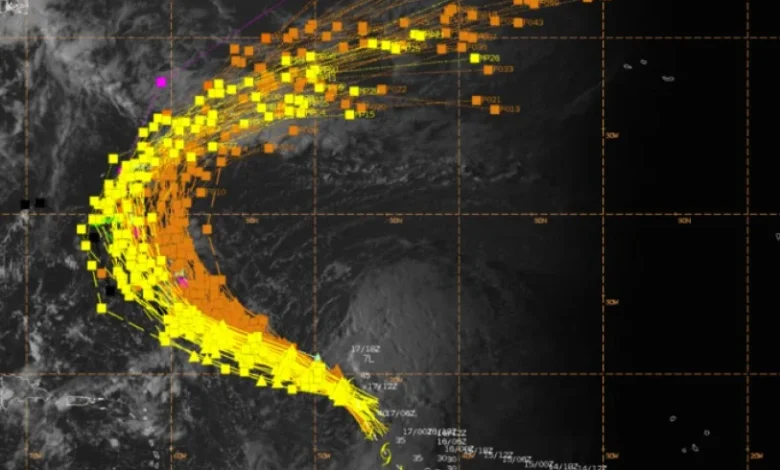
For decades, the “Cone of Uncertainty” was the most recognizable graphical product issued during a storm. However, it was frequently misunderstood; many believed it represented the size of the storm or the exact area of impact, rather than the historical error track of the storm’s center. The 2026 visual overhaul entirely reimagines this graphic. The new presentation integrates dynamic color-coding to represent extreme wind threats, severe inland flooding potential, and life-threatening storm surge far outside the central track line. By explicitly decoupling the storm’s physical hazards from the centralized cone, the public is given a far more accurate representation of their localized risk. This shift in visual communication is designed to save lives by preventing the common misconception that being “outside the cone” equates to being out of danger.
Cross-Agency Collaboration and Global Preparedness
The vast geopolitical and economic implications of severe weather require a synchronized response that extends far beyond the realm of meteorology. The modern approach to disaster preparedness involves tight, ongoing collaboration with international weather services, civil defense organizations, and private sector logistics giants. This cross-agency synergy ensures that the moment a major threat is identified, resources are preemptively staged, energy grids are reinforced, and international aid channels are primed. It is a massive orchestration of human capital and technology, serving as the ultimate defense mechanism for coastal societies worldwide. For deeper insights into governmental atmospheric policies and comprehensive global data, resources from the National Oceanic and Atmospheric Administration (NOAA) remain a vital public asset.
Synergies with Global Infrastructure and Supply Chains
The economic ripple effects of a landfalling cyclone are immense, immediately disrupting international shipping lanes, regional manufacturing hubs, and domestic retail distribution. Recognizing this, the latest forecasting data is seamlessly integrated into the command centers of global logistics enterprises. Accurate, long-range predictive models allow massive supply chains to strategically reroute essential goods, a logistical maneuvering explored in depth within Walmart’s complete 2026 blueprint for global retail dominance. By preemptively shifting inventory away from high-risk impact zones, these corporations maintain critical operational continuity. Similarly, ensuring that emergency supplies and everyday necessities continue to flow requires sophisticated navigation of disrupted infrastructure, a challenge heavily mitigated by innovations like the AI-powered package delivery revolution at USPS. Ultimately, the synthesis of elite meteorological forecasting with advanced corporate logistics exemplifies the holistic, modern strategy necessary to weather the devastating impacts of nature’s most powerful storms.