Lowes 2026 Retail Strategy, Q1 Earnings and Market News
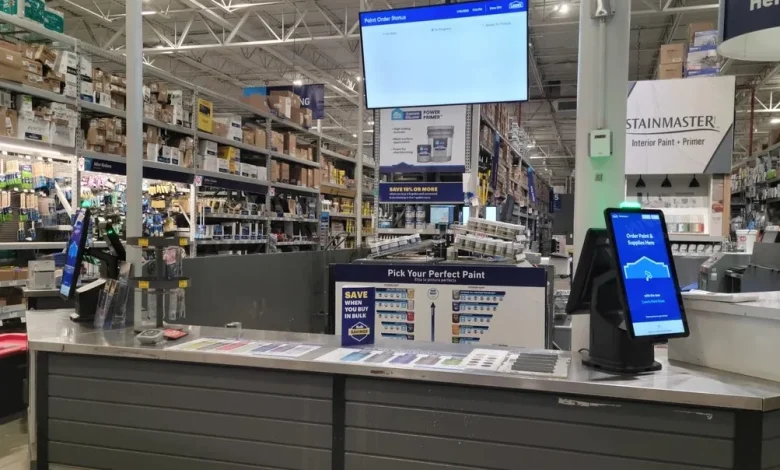
Lowes continues to dominate the home improvement retail sector in 2026, launching a series of ambitious strategic initiatives designed to capture greater market share, optimize supply chain logistics, and redefine the omnichannel shopping experience. As macroeconomic pressures fluctuate and the global housing market adapts to new interest rate environments, this retail giant has aggressively pivoted toward technological integration and localized store formats. The news surrounding the company’s first-quarter performance highlights a robust resilience that has captured the attention of Wall Street analysts and industry insiders alike. In an era where legacy retailers must evolve or face obsolescence, the leadership team has doubled down on core growth vectors: expanding the ‘Pro’ customer base, scaling digital fulfillment capabilities, and implementing advanced predictive analytics. This comprehensive analysis dives deep into the corporate roadmap for the current fiscal year, exploring the localized impacts of global trends and the intricate operational adjustments that are setting a new standard for big-box retail resilience.
Macroeconomic Climate and Housing Market
The macroeconomic climate in 2026 presents a complex web of challenges and opportunities for the home improvement industry. Following a period of volatile mortgage rates and housing supply shortages, homeowners are increasingly choosing to remodel and upgrade their existing properties rather than entering a highly competitive and expensive buyer’s market. This “age-in-place” phenomenon has served as a massive tailwind for home improvement retailers. Analysts tracking consumer spending patterns have noted a distinct shift from discretionary luxury goods toward substantive, value-adding home renovations. From energy-efficient appliance upgrades to comprehensive kitchen remodels, the modern homeowner is prioritizing long-term livability and property value preservation.
Furthermore, the persistent strength of the labor market and stabilizing inflation rates have given consumers the confidence to undertake large-ticket projects that were previously deferred. Urban migration trends have also stabilized, leading to a resurgence in suburban home investments. Recognizing these macroeconomic indicators, corporate strategists have carefully aligned product assortments and inventory levels to meet the specific demands of this renovation renaissance, positioning the brand to capitalize on steady consumer spending despite broader economic uncertainties.
Q1 2026 Earnings Breakdown
Financial markets reacted favorably to the Q1 2026 earnings report, which showcased a significant beat on both top-line revenue and bottom-line profitability. Total sales saw a resilient uptick, driven primarily by an expansion in high-margin categories such as smart home tech and professional-grade building materials. Operating margins expanded by 120 basis points, an impressive feat achieved through rigorous cost-control measures, optimized inventory management, and lower freight costs compared to previous fiscal cycles. The corporate board also announced an aggressive expansion of their share repurchase program, signaling strong internal confidence in future cash flow generation.
Dividend growth remains a cornerstone of the company’s value proposition to shareholders, with a newly announced increase that outpaces the industry average. This robust financial health provides the necessary capital to fund capital-intensive growth initiatives, such as store remodels and technological acquisitions. The earnings call highlighted a particularly strong performance in same-store sales across suburban and rural markets, offsetting softer foot traffic in specific metropolitan areas. Overall, the Q1 financial snapshot portrays an enterprise that has successfully navigated post-pandemic normalization and established a sustainable trajectory for profitable growth.
Technological Overhaul: AI and Supply Chain
At the heart of this retail evolution is a massive investment in technological infrastructure. To maintain a competitive edge, the company has integrated state-of-the-art predictive analytics to overhaul its supply chain logistics. By leveraging machine learning models, store managers can now accurately forecast localized demand for specific products based on granular data points, including regional weather patterns, local housing starts, and historical purchasing trends. This transition mirrors broader industry movements, highly reminiscent of the latest AI infrastructure innovations that are fundamentally reshaping how global enterprises process data and automate complex decision-making.
Warehouse automation has also reached new heights in 2026. Robotic fulfillment centers have drastically reduced the time required to process e-commerce orders, enabling next-day and, in some key markets, same-day delivery for thousands of SKUs. Additionally, augmented reality (AR) applications deployed on associate handheld devices allow for real-time inventory tracking, significantly reducing out-of-stock scenarios and improving the in-store customer experience. This seamless blend of digital intelligence and physical logistics is rapidly becoming the gold standard for operational excellence in retail.
Market Expansion: Rural vs. Urban Concepts
Geographic and demographic market expansion remains a cornerstone of the 2026 growth thesis. Recognizing that a one-size-fits-all approach is no longer viable, the real estate strategy has diversified into distinct store formats tailored to specific community needs. In rural and exurban areas, newly launched “Farm and Ranch” expanded layouts offer specialized agricultural supplies, heavy-duty outdoor power equipment, and localized hardware that caters to rural homeowners and agricultural professionals. This hyper-localized approach has rapidly gained traction, capturing market share from independent regional chains.
Conversely, in densely populated urban centers, the company is experimenting with smaller footprint “Express” locations. These localized hubs prioritize high-turnover items like paint, essential tools, and smart home devices, functioning simultaneously as micro-fulfillment centers for urban e-commerce deliveries. By strategically bifurcating its physical footprint, the retailer ensures maximum market penetration across diverse demographic landscapes, effectively broadening its total addressable market while optimizing square footage profitability.
Strategic Growth Metrics Table
To fully grasp the magnitude of the operational shifts undertaken over the past year, it is essential to review the key performance indicators. The following table outlines the comparative strategic metrics between the close of 2025 and the projected milestones for the end of 2026.
| Strategic Metric | 2025 EOY Status | 2026 Target / Projection | YoY Growth Area |
|---|---|---|---|
| Pro-Customer Sales Penetration | 24% of total revenue | 28% of total revenue | +4% Expansion |
| E-commerce Order Fulfillment Speed | 48 hours (average) | 24 hours (average) | 50% Reduction |
| Automated Micro-Fulfillment Centers | 12 Regional Hubs | 35 Regional Hubs | +23 Locations |
| Rural Store Formats Deployed | 45 Locations | 110 Locations | +65 Locations |
| Scope 1 & 2 Emissions Reduction | 15% vs 2020 baseline | 22% vs 2020 baseline | +7% Improvement |
Pro-Customer Strategic Realignment
Historically, competitors have held a slight edge in capturing the professional contractor demographic, but 2026 marks a turning point as targeted Pro-Customer strategies come to fruition. Recognizing that professional contractors account for a disproportionately large percentage of high-volume, high-margin sales, the company has completely revamped its “Pro” loyalty programs and dedicated service desks. Job-site delivery capabilities have been exponentially enhanced through specialized flatbed fleets and dedicated account managers who provide white-glove service for large-scale construction firms.
Furthermore, intuitive digital platforms tailored specifically for contractors allow for streamlined bulk ordering, transparent volume pricing, and integrated project management tools. By embedding themselves into the daily operational workflows of professional builders, plumbers, and electricians, the retailer has transitioned from being a mere supplier to an indispensable business partner. This strategic realignment is already yielding significant dividends, reflected in the double-digit growth of Pro-specific product categories during the first quarter.
Digital Transformation and E-commerce Integration
E-commerce is no longer a secondary channel; it is the central nervous system of the 2026 retail strategy. The digital storefront has undergone a massive user experience (UX) overhaul, featuring highly intuitive search algorithms, personalized product recommendations, and seamless integration with the in-store app. Consumers can now utilize augmented reality within the mobile application to visualize how a new patio set or a specific shade of paint will look in their actual living spaces before making a purchase. This level of digital immersion is setting new benchmarks, echoing the massive e-commerce shifts and AI integrations seen across other major online marketplaces.
Additionally, the “Buy Online, Pick Up In-Store” (BOPIS) infrastructure has been radically streamlined. Dedicated parking zones, automated pickup lockers, and synchronized mobile alerts ensure that the friction between digital checkout and physical possession is virtually eliminated. This unified commerce approach ensures that regardless of how a consumer chooses to interact with the brand, the experience is consistently fluid, highly responsive, and deeply integrated with their personal preferences and purchase history.
Sustainability Initiatives and ESG Goals
Environmental, Social, and Governance (ESG) mandates have moved from the periphery to the core of corporate operations. In 2026, the commitment to green retail is palpable across the entire supply chain. Extensive solar panel installations have been completed on the roofs of hundreds of big-box locations, drastically reducing reliance on traditional power grids and lowering operational overhead. The transition toward electric vehicles (EV) for last-mile delivery fleets is ahead of schedule, contributing significantly to the reduction of Scope 1 emissions.
Beyond operational energy consumption, there is a profound emphasis on sustainable product sourcing. The retailer has instituted strict environmental guidelines for vendors, prioritizing sustainably harvested timber, non-toxic paints, and energy-efficient appliances. Educational campaigns aimed at consumers highlight the long-term cost savings and environmental benefits of upgrading to eco-friendly home systems. By championing sustainability, the brand not only aligns itself with global climate goals—a critical focus for the National Retail Federation and other industry bodies—but also deeply resonates with the values of the modern, environmentally conscious consumer.
Future Outlook and Final Thoughts
Looking ahead to the remainder of 2026 and beyond, the blueprint for sustained dominance in the home improvement sector is meticulously laid out. The interplay between localized market expansion, aggressive digital transformation, and a relentless focus on the professional contractor establishes a highly diversified and robust revenue stream. While the broader retail ecosystem continues to face disruptive forces, as evidenced by recent retail strategy and Q1 market insights across various sectors, this particular enterprise has insulated itself through strategic agility and technological foresight. Even when compared to broader retail overhaul trends happening in health and wellness big-box stores, the focused execution on home improvement specific innovations remains unmatched.
Ultimately, the corporate narrative of 2026 is one of proactive evolution. By anticipating consumer needs, leveraging cutting-edge predictive artificial intelligence, and maintaining stringent financial discipline, the foundation has been set not just to weather economic storms, but to redefine the very landscape of big-box retail for the next decade.