European energy crisis: EC Urges Remote Work and Renewables
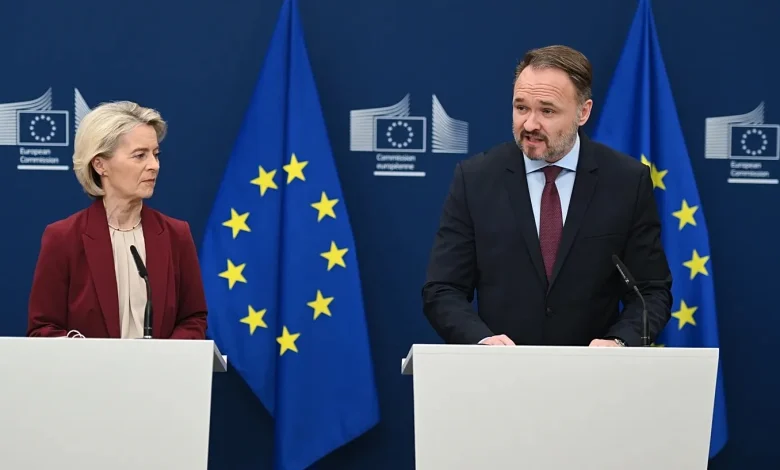
European energy crisis warnings have reached an unprecedented crescendo this week as the European Commission officially urged all citizens across member states to fundamentally alter their daily lives in response to a prolonged structural deficit in power and fuel supplies. Confronted with a rapidly deteriorating situation stemming from the escalated conflict in the Gulf, the European Commission has mandated a dramatic shift in energy consumption behaviors, specifically calling for individuals to work from home, drive and fly significantly less, and demanding that European Union countries urgently accelerate the rollout of renewable energy infrastructure. This historic announcement underscores the gravity of the current geopolitical standoff and its catastrophic impact on global energy markets. The immediate reduction of civilian energy usage is no longer viewed merely as an environmental aspiration but as a critical national security imperative designed to prevent total grid failures and economic paralysis across the continent. By enforcing these sweeping recommendations, policymakers hope to mitigate the most severe impacts of the supply crunch while buying crucial time to fundamentally restructure the European energy architecture.
The Catalyst: How the Gulf Conflict Ignited a Prolonged Energy Squeeze
The origins of this extreme policy shift can be traced directly to the spiraling hostilities in the Middle East. With major shipping lanes compromised and vital extraction facilities operating under the constant threat of disruption, the flow of liquid natural gas (LNG) and crude oil into European ports has been severely bottlenecked. The geopolitical shockwaves, exacerbated by the recent Israel-Iran strike in South Pars and its 2026 global energy fallout, have effectively severed several critical arteries of hydrocarbon supply that Europe relied upon to replace Russian exports following the events of 2022. The Gulf conflict has transformed from a localized territorial dispute into a full-blown global energy chokehold. Tanker insurance premiums have skyrocketed to unsustainable levels, and key straits are operating at a fraction of their historical capacity. This bottleneck has left European storage reserves vulnerable to rapid depletion, forcing the European Commission to confront the reality that market forces alone cannot solve a physical shortage of molecules. The urgency of the situation demands radical, unified action from all member states to suppress demand artificially.
Immediate Ramifications for Global Supply Chains
The immediate ramifications of this supply constriction are rippling violently through global supply chains. Heavy industries, particularly petrochemicals, steel manufacturing, and fertilizer production, are facing an existential threat as energy inputs become prohibitively expensive or entirely unavailable. As these foundational industries scale back operations, downstream manufacturing sectors are experiencing severe shortages of critical materials. The cascading effect is causing prolonged delays and rampant inflation across consumer goods, electronics, and automotive markets. Transportation and logistics networks, the lifeblood of international trade, are similarly burdened by surging diesel and maritime fuel costs, forcing companies to drastically rethink their operational models. The European Commission recognizes that protecting these core industrial supply chains requires civilian demand destruction, ensuring that whatever limited energy resources remain are prioritized for critical economic and societal functions rather than discretionary consumption.
European Commission’s Emergency Mandates: Remote Work and Reduced Travel
In a bid to instantly slash millions of barrels from the continent’s daily energy expenditure, the European Commission has championed a mass return to remote work for all eligible sectors. Telecommuting is heralded as one of the most effective, rapidly deployable tools for aggregate demand reduction. By eliminating the daily commute for tens of millions of white-collar workers, the EU can significantly curtail gasoline and diesel consumption overnight. Furthermore, consolidating the workforce into their homes allows for the systematic powering down of massive commercial real estate footprints, reducing the immense heating, cooling, and electrical loads demanded by modern office towers. To support this sudden decentralized workforce, there is a renewed reliance on digital infrastructure and enterprise communication platforms, much like the advancements seen in the ultimate AI email revolution and remote productivity tools that have defined corporate modernization. The Commission is actively encouraging employers to formalize hybrid or fully remote schedules immediately, framing this not as a workplace perk, but as an urgent civic duty.
Analyzing the Drive Less, Fly Less Initiative
Beyond the daily commute, the EC is targeting discretionary travel with its blunt drive less, fly less directive. European citizens are being asked to consolidate trips, utilize public transportation networks, and substitute domestic short-haul flights with electrified high-speed rail wherever feasible. The aviation sector, already grappling with fluctuating post-pandemic demand, is now positioned squarely in the crosshairs of energy conservation efforts. The drastic reduction in consumer air travel is accelerating the pressure on major carriers, echoing the broader industry push towards global aviation fleet efficiency and AI innovations to survive in a low-margin, high-fuel-cost environment. The Commission is exploring potential subsidies for rail operators to artificially lower ticket prices, making trains the undeniable economical choice. Furthermore, municipal governments are being urged to implement car-free days, expand cycling infrastructure at an unprecedented pace, and heavily penalize unnecessary vehicular traffic in major urban centers.
The Urgent Pivot to Renewable Energy Infrastructure
While behavioral modifications offer an essential short-term buffer, the European Commission unequivocally states that the only viable long-term solution to the energy crisis is an unprecedented acceleration of renewable energy deployment. The current Gulf conflict has thoroughly dismantled any remaining illusions about the safety of relying on imported fossil fuels. The EC’s mandate calls for the urgent removal of bureaucratic red tape, environmental permitting delays, and local zoning disputes that have historically throttled the construction of wind and solar farms. Member states are instructed to designate specific geographic zones as go-to areas for renewable development, where projects can be approved on expedited timelines. This transition is not merely about achieving climate targets; it is fundamentally about securing energy sovereignty and national security in an increasingly fractured global landscape. The expansion of domestic clean energy generation is the ultimate safeguard against future geopolitical blackmail.
Fast-Tracking Solar and Wind Projects Across the EU
The explicit focus of this fast-tracking initiative centers on photovoltaic solar and offshore wind capabilities. Solar energy, due to its relatively rapid installation timeline, is being pushed at both the utility scale and the residential level, with aggressive financial incentives rolled out for rooftop installations. Offshore wind, while requiring longer lead times, is being prioritized for its massive generation potential, particularly in the North Sea and Baltic regions. The Commission is coordinating cross-border grid interconnectivity projects to ensure that surplus green energy generated in one region can seamlessly flow to areas experiencing localized deficits. However, this monumental pivot faces profound logistical hurdles, primarily centered around supply chain constraints for critical minerals and the manufacturing capacity for turbines and solar cells. Overcoming these bottlenecks requires massive, coordinated public and private investment on a scale reminiscent of wartime mobilization.
| Energy Sector / Initiative | Pre-Crisis Target (2030) | Emergency EC Mandate (2028) | Primary Integration Challenge |
|---|---|---|---|
| Solar Capacity Expansion | 600 GW | 850 GW | Supply chain bottlenecks for photovoltaic panels |
| Wind Power Generation | 480 GW | 650 GW | Offshore permitting and grid connectivity delays |
| Corporate Remote Work | 20% of Workforce | 50% of Workforce | Enterprise infrastructure and cybersecurity adaptation |
| Aviation Fuel Reduction | 10% Drop in Short-Haul | 35% Drop in Short-Haul | Economic viability of regional airlines |
Economic Repercussions of the Prolonged Energy Shock
The economic toll of this prolonged energy shock cannot be overstated. As the cost of baseline electricity and transportation fuels remains stubbornly high, the European economy is facing severe headwinds that threaten to push multiple nations into deep recessions. The aggressive mandates to curtail energy use, while necessary, inherently stifle gross domestic product growth by limiting industrial output and commercial activity. This macroeconomic instability is creating significant volatility in financial markets, driving massive capital flight, which inevitably ties into broader global market trends, pricing shifts, and economic impacts as nervous investors flock to traditional safe-haven assets. The European Central Bank is caught in a precarious balancing act, forced to maintain elevated interest rates to combat supply-side inflation while trying not to completely suffocate an already fragile economic recovery. The interplay between energy scarcity and monetary policy will define the continent’s financial trajectory for the next decade.
Inflationary Pressures and Cost of Living Implications
At the consumer level, the crisis manifests most painfully through intense inflationary pressures and an escalating cost-of-living crisis. Household utility bills, despite government intervention and capping mechanisms, are absorbing an unsustainable percentage of disposable income. The rising cost of agricultural inputs, such as diesel for tractors and natural gas for fertilizers, has drastically inflated food prices at the supermarket. The Commission’s plea for citizens to alter their lifestyles is partially an acknowledgment that governments can no longer afford to infinitely shield consumers from the true cost of imported energy. Social safety nets are being stretched to their absolute breaking points, prompting urgent debates across European parliaments regarding wealth redistribution, windfall taxes on energy corporations, and the fundamental social contract between the state and its citizens during times of profound economic distress.
Evaluating Member State Readiness and Compliance Strategies
The implementation of the European Commission’s directives is highly contingent upon the varying levels of readiness and political will among the twenty-seven member states. While the EC sets the overarching policy framework, the actual enforcement of remote work mandates, travel restrictions, and renewable fast-tracking falls to national governments. There is a stark divergence in compliance strategies based on domestic energy portfolios. Nations with significant existing nuclear or hydroelectric baseloads, such as France and Sweden, possess a degree of insulation that allows for more flexible adherence to the demand reduction targets. Conversely, heavy industrial economies deeply reliant on imported gas, such as Germany and Italy, are forced to adopt draconian conservation measures to avert immediate industrial shutdowns. This disparity threatens to fracture the unified European response, as political friction emerges over burden-sharing and cross-border energy allocations during peak demand periods.
Disparities in Renewable Energy Deployment Among EU Nations
The structural disparities in renewable energy deployment further complicate the collective crisis response. Northern European nations, benefiting from years of aggressive investment in wind infrastructure, are far better positioned to absorb the geopolitical shocks than their Eastern and Southern counterparts, who may still rely heavily on legacy coal or recently disrupted gas networks. The Commission’s urgent call for a renewable rollout exposes the historical lack of uniform investment in the continent’s grid. To bridge this gap, the EU is mobilizing emergency cohesion funds to subsidize green infrastructure in lagging regions. However, the sheer physical reality of constructing high-voltage transmission lines across international borders to distribute renewable power equitably remains a monumental engineering and political challenge. Ensuring that the entire bloc transitions cohesively without leaving technologically disadvantaged nations behind is paramount to maintaining the integrity of the European Union itself.
Long-Term Geopolitical Shifts Resulting from the Energy Transition
The European energy crisis and the subsequent radical shift toward accelerated renewable deployment are catalyzing a profound realignment of global geopolitics. By forcibly decoupling its economy from Middle Eastern and Russian hydrocarbon networks, Europe is fundamentally altering the balance of global power. The transition to clean energy inherently shifts dependency from fuel suppliers to technology and mineral suppliers. This new paradigm places unprecedented strategic importance on securing access to lithium, cobalt, rare earth elements, and advanced manufacturing capabilities. Consequently, Europe is rapidly forging new diplomatic and trade alliances with mineral-rich nations in Africa, South America, and the Indo-Pacific, while simultaneously attempting to on-shore critical green technologies to avoid replacing one form of geopolitical vulnerability with another. For detailed analyses on how global energy demands will evolve under these new paradigms, independent entities continue to rely heavily on International Energy Agency (IEA) assessments, which forecast a dramatically altered energy map by the early 2030s.
Reducing Dependency on Volatile Hydrocarbon Markets
Ultimately, the European Commission’s urgent mandates represent the painful birth pangs of a post-hydrocarbon Europe. The era of relying on politically volatile regions for cheap, reliable energy is definitively over. The behavioral shifts currently being demanded—widespread telecommuting, reduced reliance on aviation, and localized energy production—are not temporary emergency measures; they are the foundational blueprints for the continent’s future operating model. The structural transition will require immense sacrifice, immense capital, and unparalleled political unity. Yet, by weathering this profound crisis and rapidly localizing its energy generation through wind, solar, and next-generation green tech, Europe has the opportunity to emerge as the world’s most resilient, energy-independent economic bloc. The current hardships, while severe, are catalyzing an inescapable leap forward into a fundamentally more secure and sustainable geopolitical reality.