Eight Sleep Valuation Reaches $1.5 Billion: Pod 5 and Predictive AI Sleep Tech
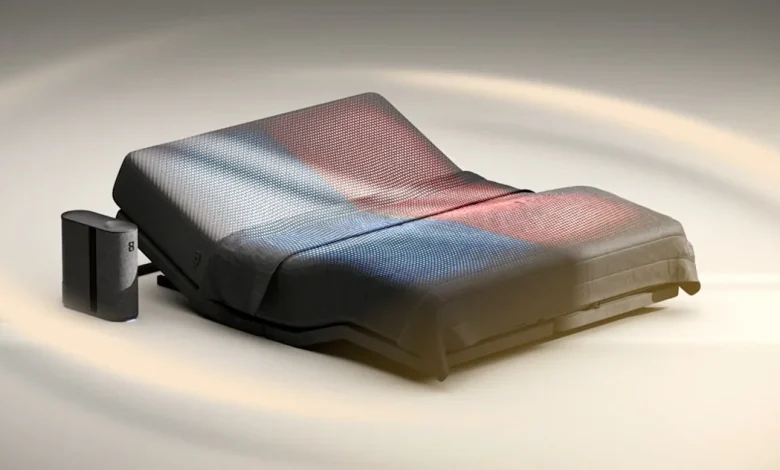
Eight Sleep has officially cemented its position as the defining health technology company of this generation, achieving a monumental $1.5 billion valuation following a $50 million strategic funding round in March 2026. By shifting its fundamental mission from basic sleep optimization to predictive, artificial intelligence-driven preventative health, the brand is transforming the modern bedroom into an advanced biometric screening platform. Following a historic 2025 where the enterprise achieved free cash flow positivity, expanded its commercial footprint across 34 countries, and launched revolutionary hardware including the Pod 5, the brand is pioneering the future of human longevity. Through rigorous clinical validation and a relentless pursuit of seamless, invisible technology, the sleep fitness pioneer is proving that proactive health management does not require cumbersome wearables or intrusive medical devices. Instead, it requires a smart mattress system that actively learns, adapts, and intervenes while you rest. The overarching philosophy driving this movement is that human beings spend roughly one-third of their entire lives in bed, making it the most logical and efficient environment for conducting continuous, non-invasive health monitoring and therapeutic intervention.
Eight Sleep Valuation Reaches $1.5 Billion in 2026
The financial trajectory of the sleep technology market has been dramatically reshaped by recent funding milestones. In early March 2026, the company successfully closed a $50 million strategic investment round led by Tether Investments, effectively propelling its valuation to an impressive $1.5 billion. This funding event closely follows a massive $100 million Series D round executed in August 2025, which was led by HealthSpan Growth (HSG) and featured participation from prominent backers such as Founders Fund, Valor Equity Partners, and Khosla Ventures. Accumulating over $310 million in total funding to date, the enterprise stands out in the highly competitive consumer health hardware sector by operating with distinct financial maturity. Most notably, the company reached a critical turning point in 2025 by achieving free cash flow positivity—a rare feat for hardware-intensive technology firms that highlights robust consumer demand and sustainable unit economics. The combination of massive capital reserves and a deeply entrenched consumer base positions the company to dominate the emerging intersection of artificial intelligence and physical wellness hardware.
The Strategic Partnership with Tether Investments
The decision by Tether Investments to lead the latest strategic round underscores a broader ideological alignment regarding the future of human potential and biometric intelligence. According to Paolo Ardoino, CEO of Tether, the investment was driven by the belief that advanced personalized AI serves as the optimal pathway to expand core human biology. The strategic capital injection is specifically earmarked for scaling research and development, accelerating the deployment of predictive modeling algorithms, and expanding clinical trials necessary for regulatory pathways. By backing a system that functions directly on-device and remains perfectly aligned with natural human behavior, investors are effectively laying the groundwork for a new standard in longevity-focused consumer technology. Unlike traditional venture capital plays that focus solely on software as a service, this strategic investment bridges the complex physical divide between biological hardware—the human body—and adaptive digital ecosystems. The ultimate objective is to provide actionable everyday insights that seamlessly integrate into core human biology, ensuring that users wake up possessing a higher baseline of physical readiness and cognitive clarity.
Transitioning from Reactive Cooling to Predictive AI Health
For years, the industry standard for smart mattresses relied heavily on reactive technologies. Earlier iterations of smart beds would read physiological signals during the night—such as a sudden spike in heart rate or a drop in ambient room temperature—and make real-time adjustments to the thermal engine. However, the latest technological leap introduces a highly sophisticated predictive AI agent capable of anticipating physiological disruptions before they ever occur. This represents a paradigm shift from passive observation to active, preemptive intervention. This predictive framework utilizes an array of external sensors and massive cloud-based data processing to generate an individualized thermal profile that evolves dynamically. It ensures that the sleeper never experiences the physiological shock of an inappropriate microclimate, fundamentally eradicating the common phenomenon of waking up sweating or shivering in the dead of night.
Autonomous Rest and the Autopilot Algorithm
The proprietary Autopilot algorithm is the central nervous system of this predictive environment. Utilizing millions of hours of anonymized sleep data, the predictive AI simulates thousands of potential scenarios prior to bedtime. If a user completes a late-evening high-intensity workout, consumes a heavy meal, or experiences elevated stress levels, the system automatically pre-cools or pre-heats the microclimate to counteract these specific physiological stressors. By understanding the user’s body better each night, the Autopilot dynamically adjusts the water temperature flowing through the mattress cover, maintaining an optimal thermal zone ranging from 55°F to 110°F seamlessly and silently. This intelligent mapping continuously recalculates the necessary variables based on real-time room humidity and historic baseline biometrics, creating an impenetrable envelope of thermal comfort optimized for deep REM sleep.
The Product Ecosystem: From Pod 4 Ultra to Pod 5
Hardware innovation remains at the core of the brand’s expansive growth strategy. The transition from the Pod 3 to the Pod 4 Ultra introduced monumental upgrades, including a redesigned thermal engine possessing twice the cooling power of its predecessor, capable of reaching 55°F even during severe heat waves. Furthermore, the Pod 4 Ultra debuted an intelligent adjustable base that introduced clinical-grade snore mitigation. By detecting snoring automatically—without requiring microphones or wearables—the bed elevates the user’s head seamlessly, an intervention clinically proven to decrease snoring by up to 45%.
However, the release of the Pod 5 in 2025 expanded the ecosystem beyond basic temperature regulation. The Pod 5 features lightning-fast heating and cooling capabilities, zero-gravity elevation programming, and fully integrated surround sound directly within the sleep environment. The hub itself was re-engineered to operate 40% quieter than older generations, emitting a mere 30 decibels, which is quieter than a standard low-speed air purifier. The transition to the Pod 5 also introduced a deeply refined fluid dynamics system, ensuring that water circulation remains completely imperceptible to the sleeper, completely eliminating the vibrations and mechanical hums that plagued earlier generations of active cooling mattresses.
| Feature Category | Pod 4 Ultra Specifications | Pod 5 Ecosystem Advancements |
|---|---|---|
| Thermal Regulation | Dual-zone cooling/heating (55°F – 110°F), 2x cooling power | Ultra-fast thermal response, AI predictive pre-conditioning |
| Snore & Position Mitigation | Automatic head elevation, proven to reduce snoring by 45% | Zero-gravity elevation profiling, holistic posture alignment |
| Acoustic Integration | Operates at 30 decibels (quieter than standard air purifiers) | Integrated surround sound audio capabilities built into the base |
| Ecosystem Accessories | Tap-to-control responsive sensor areas | Hydro-powered Thermal Blanket and smart Pod Pillow Cover |
Extending the Ecosystem: Pod Pillow Cover and Thermal Blanket
Recognizing that thermal comfort is not limited solely to the surface beneath the sleeper, the company aggressively expanded its product line to encompass a 360-degree environmental envelope. The introduction of the hydro-powered Thermal Blanket and the technologically advanced Pod Pillow Cover ensures that microclimate management covers the user entirely. Since head temperature is a critical physiological trigger for sleep onset, the smart pillow cover acts in tandem with the mattress to plunge the core body temperature precisely when required, dramatically reducing sleep latency and combating the modern epidemic of insomnia. The blanket synchronously regulates the top-layer microclimate, allowing couples with vastly different temperature preferences to experience a perfectly calibrated cocoon of rest without compromise.
Clinical Validation and the Push for FDA Clearance
Moving beyond basic consumer wellness, the brand has dedicated immense resources to rigorous clinical validation. In 2025, the company conducted the most extensive peer-reviewed clinical trials in its history. One landmark study demonstrated that the thermal regulation system successfully reduced menopausal hot flashes by a staggering 56%. A subsequent study proved that the intelligent mattress cover is the first consumer device capable of restoring the body’s natural circadian temperature rhythm during the night, significantly improving cardiovascular recovery markers such as Heart Rate Variability (HRV). These scientific endorsements represent a major validation for sleep technology, proving that active thermal regulation delivers measurable physiological improvements.
Targeting Sleep Apnea Detection and Mitigation
Perhaps the most ambitious leap for the company is its active pursuit of formal medical device classification. The organization is currently advancing clinical pathways to secure clearance from the U.S. Food and Drug Administration (FDA) for sleep apnea detection and mitigation. If granted, this clearance would fundamentally transform the intelligent mattress from a luxury wellness product into a highly regulated, population-scale health screening platform. Sleep apnea remains a massive, undiagnosed epidemic globally. By embedding respiratory and cardiac monitoring directly into the bed, the technology provides zero-friction, passive screening every single night, effectively eliminating the compliance issues that plague traditional CPAP machines and wearable diagnostics. By establishing a continuous nightly health check algorithm that leverages real-time biometric sensing to identify microscopic breathing interruptions, the technology alerts users to potential respiratory failure long before it culminates in severe cardiovascular disease or catastrophic stroke risks. The long-term implications for public health screening are staggering, given the massive global population currently suffering from undiagnosed sleep disruptions.
Navigating the Competitive Wearable and Nearable Landscape
The sleep optimization industry has witnessed a massive influx of capital, with specialized wellness players and wearable giants vying for dominance. Competitors such as the Oura Ring, which secured an $11 billion valuation in 2025 following its Series E funding, require users to physically wear a device to track biometric data. While wearables provide excellent passive analytics, they fall short in active intervention. They can inform a user that their sleep was poor, but they cannot actively cool the environment to rescue a disruptive sleep cycle. This is where nearable or invisible technology establishes a distinct competitive moat. By blending seamlessly into the analog environment of the bedroom, the intelligent mattress cover tracks respiratory rate, heart rate, and sleep stages with clinical accuracy, all without requiring the user to wear a wristband or ring to bed.
Global Expansion and the Future of the Analog Bedroom
The consumer appetite for frictionless health technology is global. By the end of 2025, the brand successfully scaled its commercial operations, shipping its intelligent sleep systems to 34 countries worldwide. Supported by a culturally diverse group of high-profile investors—including Formula 1 driver Charles Leclerc and comedian Kevin Hart—the brand has permeated mainstream consciousness. The bedroom has long remained the last analog sanctuary in the modern home, untouched by the aggressive digitization that characterizes living rooms and home offices. By embedding complex biometrics and artificial intelligence invisibly beneath the sheets, the company preserves the tranquility of the bedroom while secretly deploying the most advanced health tracking available to consumers.
Conclusion: Defining the Next Generation of Human Biology Interventions
The recent milestone of a $1.5 billion valuation is merely a stepping stone for a company that envisions a future governed by preventative, personalized health intelligence. By bridging the critical gap between passive data collection and active, real-time physiological intervention, the brand is redefining what it means to truly recover. The evolution from the reactive Pod 4 to the predictive, AI-driven Pod 5 ecosystem represents a monumental leap in consumer hardware. As the company aggressively pursues FDA clearance and integrates massive datasets to detect chronic conditions like sleep apnea, it transitions into an entirely new category of medical-grade smart home infrastructure. Ultimately, the era of human-first health intelligence has arrived, and it begins the moment you go to sleep. In an age where digital fatigue and wearable burnout are increasingly prevalent among consumers, the concept of a completely invisible, highly responsive health companion offers a compelling glimpse into the future of longevity. As algorithms continue to learn and refine their understanding of human circadian rhythms, the mattress will no longer be viewed simply as a piece of furniture, but rather as the most critical medical device in the modern household.