Donald Trump Presidency: Year One Status Report (January 2026)
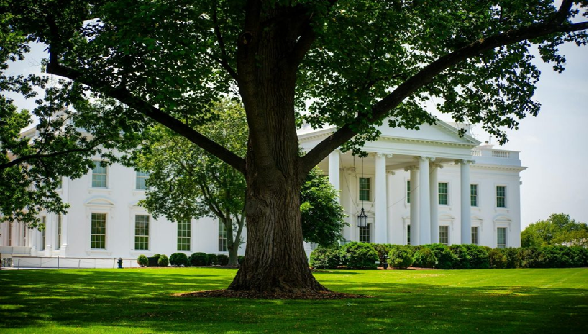
Introduction: The Return to Power
As of January 19, 2026, President Donald J. Trump is concluding the first year of his second term as the 47th President of the United States. Following a decisive victory in the 2024 election—securing 312 electoral votes against Vice President Kamala Harris—Trump’s return to the Oval Office has been defined by aggressive executive action, a complete dismantling of prior legal challenges, and a foreign policy pivot toward transactional realism.
This report analyzes the administration’s performance against its Agenda 47 promises, the stabilization of his cabinet following early volatility, and the geopolitical ramifications of his “America First” doctrine one year in.
The Cabinet & Administration: Loyalists and The DOGE Experiment
President Trump’s second-term cabinet stands in stark contrast to his first, prioritizing ideological alignment and personal loyalty over establishment credentials. Key appointments confirmed in early 2025 include:
- J.D. Vance as Vice President, taking an active role in legislative negotiation.
- Marco Rubio as Secretary of State, leading a hawkish reconfiguration of Latin American and Chinese relations.
- Pete Hegseth as Secretary of Defense, confirmed via a tie-breaking vote by VP Vance, signaling a disruption of Pentagon bureaucracy.
- Pam Bondi as Attorney General, who spearheaded the reversal of federal prosecutorial priorities.
The Rise and Fall of the Department of Government Efficiency (DOGE)
One of the most publicized initiatives, the Department of Government Efficiency (DOGE), launched with high expectations under the leadership of Elon Musk. Intended to slash federal spending and dismantle regulatory frameworks, the initiative faced internal friction. By May 2025, Musk departed the role following public disagreements regarding deficit projections and the implementation of the “One Big Beautiful Bill,” marking an early rupture in the administration’s alliance with Silicon Valley libertarians.
Legal Battles: The ‘Lawfare’ Reversal
The return to the presidency effectively ended the era of criminal prosecution against Trump, validating his campaign strategy of delay and re-election. By mid-2025, the legal landscape had shifted dramatically:
| Case / Jurisdiction | Status as of Jan 2026 | Outcome |
|---|---|---|
| Federal Election Interference (Jan 6) | Dismissed | DOJ ended prosecution citing presidential immunity and executive authority. |
| Classified Documents (Florida) | Dismissed | Charges dropped following the dismissal of Special Counsel Jack Smith. |
| New York Hush Money (Manhattan) | Resolved | Sentenced to unconditional discharge on Jan 10, 2025, effectively closing the case without incarceration. |
| Georgia Election Interference | Dropped | Case collapsed following prosecutorial resignations and lack of federal cooperation. |
Foreign Policy: The ‘Donroe Doctrine’
The administration has pursued what analysts term the “Donroe Doctrine”—an expansion of the Monroe Doctrine combined with transactional isolationism toward Europe.
Israel-Gaza Ceasefire
In October 2025, the Trump administration brokered a ceasefire between Israel and Hamas. While the deal secured the release of remaining hostages, it has left the Gaza Strip under a complex security arrangement that critics argue remains fragile. Concurrently, the U.S. launched targeted strikes against Iranian nuclear sites in June 2025, responding to enriched uranium escalations with what the President termed “maximum pressure 2.0.”
The Ukraine Conflict
Despite campaign promises to end the Russia-Ukraine war “in 24 hours,” the conflict persists into 2026. The administration has leveraged U.S. aid as a bargaining chip, demanding European nations assume the financial burden of defense. Peace talks have stalled, with Kyiv resisting territorial concessions despite reducing American material support.
Domestic Agenda: Immigration and Trade
Agenda 47 moved from rhetoric to policy through a series of executive orders in Q1 2025. The administration initiated mass deportation proceedings, though logistical bottlenecks have slowed the pace compared to campaign estimates. On the economic front, the imposition of baseline tariffs on foreign goods has reshaped supply chains, sparking a trade standoff with the European Union while boosting domestic manufacturing sectors favored by the GOP base.
Conclusion: The Year Ahead
Entering 2026, President Trump maintains a firm grip on the Republican party and the executive branch. The year ahead will likely be defined by the economic long-term impact of new tariffs and the sustainability of the fragile peace accords in the Middle East. With the legal threats neutralized, the administration is now fully focused on cementing the institutional changes of the MAGA movement.
Sources & References
- •
WHYY: Trump certified as 2024 election winner (Jan 6, 2025) - •
Ballotpedia: Donald Trump’s Cabinet 2025-2026 - •
Wikipedia: Second Cabinet of Donald Trump - •
Time Magazine: How Trump’s Foreign Policy Gambits Are Reshaping the World (Jan 2026)




3 Comments