Biden Student Loan Forgiveness: Comprehensive 2026 Legal and Economic Analysis
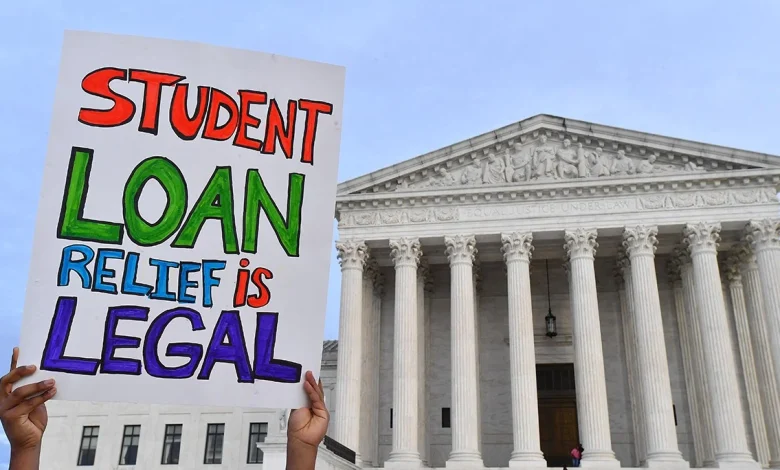
Biden Student Loan Forgiveness remains a defining economic and political cornerstone of the administration’s domestic policy agenda as we navigate through the complexities of early 2026. What began as a sweeping campaign promise has transformed into an intricate web of targeted regulatory actions, persistent legal battles, and profound macroeconomic shifts. The landscape of higher education financing in the United States has undergone unprecedented turbulence and reform, moving away from a monolithic system of debt collection toward a highly segmented, income-responsive framework. This extensive guide provides a thorough, authoritative analysis of the current state of student debt relief, the mechanics of ongoing forgiveness initiatives, the judicial hurdles that continue to shape the policy, and the overarching financial ramifications for millions of borrowers and the broader global economy.
The Evolution of Debt Relief Policies Under the Administration
The trajectory of student debt relief has been anything but linear. Following the Supreme Court’s landmark decision in 2023 to strike down the administration’s initial plan to wipe out up to $20,000 for qualifying borrowers under the HEROES Act, the Department of Education was forced to pivot aggressively. This pivot resulted in what policy analysts dubbed “Plan B,” a strategic realignment utilizing the compromise and settlement authority embedded within the Higher Education Act (HEA) of 1965. Throughout 2024 and 2025, the administration engaged in a rigorous negotiated rulemaking process, pulling together stakeholders from various sectors, including student advocates, financial institutions, and legal scholars, to draft a more legally resilient framework. By the time we reached 2026, this piecemeal approach had successfully discharged over $150 billion in debt for specifically targeted groups, circumventing the need for broad, universal forgiveness while simultaneously delivering life-altering relief to those most severely crushed by ballooning interest capitalization. The evolution from a broad-strokes executive order to a highly technical, regulatory overhaul highlights the administration’s determination to fulfill its mandate despite massive institutional resistance. This shift has also forced loan servicers to rapidly overhaul their antiquated technological infrastructures to accommodate complex new algorithms that calculate discretionary income and poverty line thresholds on a dynamic basis.
Key Demographics Benefiting from the 2026 Relief Measures
Understanding the impact of the current initiatives requires a deep dive into the specific demographics that have successfully navigated the bureaucratic labyrinth to secure relief. Public servants, including teachers, nurses, first responders, and non-profit employees, have been the primary beneficiaries through the newly streamlined Public Service Loan Forgiveness (PSLF) program. Historically notorious for its 98% rejection rate due to esoteric filing requirements and servicer errors, the PSLF program in 2026 operates with unprecedented efficiency. Permanent implementations of previous waiver rules have allowed borrowers to retroactively count payments made under previously ineligible repayment plans or incorrect loan types. Additionally, massive waves of relief have been directed toward borrowers who were fundamentally defrauded by predatory for-profit institutions. The Borrower Defense to Repayment regulations have been completely fortified, resulting in automatic discharges for cohorts of students who attended infamous institutions that promised lucrative careers but delivered worthless degrees. Furthermore, the administration has systematically identified and granted relief to borrowers who have been trapped in the repayment system for over twenty years. These legacy borrowers, many of whom owed substantially more than their original principal due to aggressive interest accrual, have seen their remaining balances wiped clean in a move designed to correct historical failures within the Income-Driven Repayment (IDR) tracking mechanisms.
Detailed Breakdown of Current Forgiveness Programs
To fully grasp the scope of the administration’s multifaceted approach, it is crucial to understand the distinct pillars of the current debt relief infrastructure. The following table provides a comprehensive summary of the primary programs operational in 2026, detailing their target demographics, current legal status, and the extent of the relief provided.
| Program Name | Target Demographic | 2026 Legal & Operational Status | Relief Mechanism and Amount |
|---|---|---|---|
| Saving on a Valuable Education (SAVE) Plan | Low to Middle-Income Earners, Recent Graduates | Active operations, facing ongoing appellate court litigation | Caps payments at 5% of discretionary income; prevents unpaid interest from capitalizing; up to 100% forgiveness after 10-20 years. |
| Public Service Loan Forgiveness (PSLF) | Government Workers, Public School Teachers, Non-Profit Staff | Fully streamlined; historical waivers integrated permanently | 100% of remaining federal loan balance discharged after 120 qualifying, certified monthly payments. |
| Borrower Defense to Repayment | Students Defrauded by For-Profit or Predatory Colleges | Expedited processing; blanket group discharges utilized | Full discharge of applicable federal loans and potential reimbursement of previously made payments. |
| Total and Permanent Disability (TPD) Discharge | Veterans and Individuals with Severe Medical Disabilities | Automated data-matching with VA and Social Security Admin | Immediate, full discharge of all federal student loan debt with waived federal tax liabilities. |
The SAVE Plan’s Lasting Economic Impact
Of all the administrative achievements, the Saving on a Valuable Education (SAVE) plan stands as the most transformative overhaul of federal student aid in decades. In 2026, the SAVE plan acts as an aggressive wealth-preservation tool for the middle class. By increasing the poverty line exemption from 150% to 225%, millions of borrowers who earn less than roughly $32,800 annually (or higher for larger families) are required to make $0 monthly payments. Most importantly, the SAVE plan fundamentally alters the mathematics of student debt by completely subsidizing unpaid monthly interest. Under previous plans, a borrower’s $0 payment would result in the capitalization of accrued interest, causing their total balance to grow exponentially despite their compliance with the program. The SAVE plan halts this vicious cycle. If a borrower’s calculated monthly payment does not cover the accrued interest, the Department of Education covers the difference. This single regulatory shift has prevented billions of dollars in phantom debt from attaching to the millennial and Gen Z working classes, fundamentally altering their long-term financial trajectories and their ability to accumulate generational wealth.
Legal Challenges and Supreme Court Precedents
No analysis of this subject is complete without thoroughly examining the fierce judicial opposition that continues to threaten these programs. Conservative legal organizations and several state attorneys general have mounted relentless legal campaigns against the administration’s efforts, arguing that these actions represent an unconstitutional overreach of executive authority. These lawsuits frequently invoke the “major questions doctrine,” a legal theory recently embraced by the Supreme Court, which posits that administrative agencies cannot enact regulations with vast economic or political significance without explicit, unambiguous authorization from Congress. The plaintiffs argue that the sweeping modifications to the IDR plans, specifically the SAVE plan, equate to a backdoor cancellation of hundreds of billions of dollars, effectively bypassing the legislative branch’s power of the purse. Throughout early 2026, various circuit courts have issued conflicting injunctions, creating a volatile environment where borrowers are unsure if their current payment plans will survive the next judicial quarter.
Constitutional Debates over Executive Power
The core of the constitutional debate revolves around the interpretation of the Higher Education Act. The administration’s legal counsel maintains that the HEA explicitly grants the Secretary of Education the authority to “compromise, waive, or release” any right, title, claim, lien, or demand related to federal student loans. They argue that this statutory text is broad by design, allowing the executive branch the flexibility to manage the federal loan portfolio efficiently and compassionately in the face of systemic servicing failures. Conversely, the opposition asserts that this clause was historically intended for individual, case-by-case settlements—such as when a borrower goes into catastrophic default—not for the wholesale rewriting of repayment terms for tens of millions of people. This legal tug-of-war is anticipated to culminate in yet another Supreme Court showdown before the end of the 2026 term, an event that will likely set a permanent precedent regarding the limits of administrative state power in the United States.
Economic Ramifications: Inflation vs. Consumer Spending
The economic consequences of discharging immense volumes of student debt are a subject of intense debate among macroeconomists. Detractors have consistently warned that debt relief would act as an inflationary catalyst, pumping billions of dollars of artificial liquidity into a post-pandemic economy still recovering from supply chain shocks. However, the empirical data emerging in 2026 suggests a more nuanced reality. The relief has primarily stabilized household balance sheets rather than triggering rampant speculative spending. Borrowers are utilizing their newfound financial bandwidth to qualify for mortgages, start small businesses, and invest in retirement accounts. This shift is clearly reflected in how major retail giants adjust their forward-looking models. For instance, evaluating the 2026 retail strategy and market insights reveals a distinct pivot toward capturing the discretionary spending of millennials and Gen Z consumers who are the primary beneficiaries of debt relief. Furthermore, the stabilization of personal finances among younger demographics has intriguing parallels to shifts in housing and commercial property health, as seen in the broader real estate strategy and store closures that dictate suburban commercial health. The ripple effect extends even into traditional investment safe havens; with shifting inflationary pressures influenced by national debt policies, understanding global market trends and economic impacts becomes essential for institutional investors tracking the long-term viability of the US dollar against the sheer scale of federal student loan discharges. For official guidance and updates on individual borrower eligibility, citizens are continually directed to the Federal Student Aid portal, which has undergone significant infrastructure upgrades to handle the massive influx of 2026 applications and inquiries.
Future Forecast: What Borrowers Should Expect Beyond 2026
Looking beyond the immediate horizon of 2026, the future of higher education financing remains precariously balanced on the edge of the upcoming electoral cycles. If the current administration maintains its executive footing, we can expect a continued expansion of targeted relief programs, further crackdowns on predatory lending institutions, and enhanced regulatory oversight of institutional tuition inflation. Conversely, a shift in political power could lead to an immediate rollback of the SAVE plan regulations, a reinstatement of harsher capitalization rules, and the privatization of the federal student loan apparatus. Regardless of the political outcome, the foundational flaws in the American higher education system—namely, the unrestricted ability of universities to raise tuition costs backed by guaranteed federal loans—remain largely unaddressed by mere debt cancellation. True, sustainable reform will require comprehensive congressional action to limit borrowing caps, enforce strict accountability metrics on university endowments, and perhaps introduce robust federal subsidies for public universities. Until such legislative miracles occur, borrowers must remain hyper-vigilant, continuously updating their income certifications, archiving all communications with their loan servicers, and strategically utilizing the existing legal frameworks to minimize their lifelong financial burdens. The narrative of student debt in America is far from its concluding chapter, and the financial destinies of millions will hinge on the judicial and political developments of the coming years.