Bahrain Protests Escalate: Al Khalifa Flight and Iran Risks
Bahrain stands at the precipice of a geopolitical earthquake in late March 2026, as unprecedented protests rapidly escalate across the island nation, threatening to overthrow the longstanding rule of the Al Khalifa monarchy. The unfolding crisis is not merely a domestic uprising but a severe geopolitical flashpoint that holds the potential to violently restructure the balance of power in the Middle East. With reports heavily indicating that the ruling Al Khalifa family is actively orchestrating a strategic relocation to neighboring Saudi Arabia, the vacuum of power presents an immense risk of Iranian intervention. Because nearly 65% of the Bahraini population consists of pro-Iranian Shia Muslims who have historically faced systemic marginalization, Tehran views this socio-political conflagration as a prime opportunity to assert dominance and potentially reclaim Bahrain—a territory it has historically referred to as its fourteenth province. The magnitude of this situation requires an extensive analysis of the historical, demographic, and geopolitical forces converging on Manama.
The Eruption of Unprecedented Demonstrations
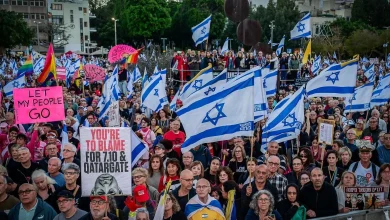
The streets of Manama, Sitra, and Diraz have become the epicenters of colossal demonstrations that dwarf the uprisings seen during the 2011 Arab Spring. Unlike previous protests, which were largely contained by localized riot police and rapid interventions from the Gulf Cooperation Council (GCC) Peninsula Shield Force, the current wave of protests features unparalleled coordination, digital mobilization, and a resolute defiance that has overwhelmed the state security apparatus. Demonstrators have blockaded critical infrastructure, effectively paralyzing the nation’s financial districts and arterial highways. The swiftness of this escalation points to deep-seated frustrations that have been boiling under the surface for over a decade, culminating in a critical mass that refuses to be suppressed through conventional authoritarian measures.
Roots of the Current Uprising
The genesis of these contemporary protests lies in a complex matrix of socio-economic disenfranchisement and sectarian grievances. For decades, the Sunni ruling elite has maintained a tight grip on political power, economic resources, and the military, largely excluding the Shia majority from meaningful participation in the state. Discriminatory employment practices, the naturalization of foreign Sunnis to alter the demographic balance, and the severe suppression of political opposition have fueled a profound sense of injustice. Independent human rights organizations, such as those monitored by Amnesty International reports on human rights issues, have long documented the persistent human rights abuses, arbitrary detentions, and extrajudicial actions deployed against Shia activists. These systemic inequities, exacerbated by recent economic downturns and the rising cost of living, have catalyzed the current explosion of public anger, transforming long-standing sectarian tension into a direct assault on the legitimacy of the Al Khalifa regime.
The Al Khalifa Family’s Strategic Retreat to Saudi Arabia
As the internal security situation rapidly deteriorates, high-level intelligence reports suggest that the Al Khalifa family is in the advanced stages of executing a strategic withdrawal to Saudi Arabia. The King Fahd Causeway, the crucial 25-kilometer series of bridges and causeways connecting Bahrain to Saudi Arabia’s Eastern Province, has reportedly seen a massive surge in restricted diplomatic and royal convoys. This anticipated retreat is a stark admission of the regime’s crumbling domestic authority and its reliance on external benefactors for physical survival. If the royal family formally abandons Manama, it would signal the total collapse of the state apparatus, leaving a dangerous power vacuum that could easily descend into outright civil war or swift foreign annexation.
Saudi Arabia’s Role as a Regional Buffer
Riyadh views the potential fall of the Al Khalifa monarchy as an existential threat to its own national security. Saudi Arabia’s Eastern Province, which is geographically adjacent to Bahrain, is also home to a significant Shia population that has historically harbored anti-government sentiments. The Saudi leadership fears that a successful Shia uprising in Bahrain would serve as an undeniable catalyst, inspiring parallel revolts within its own oil-rich territories. Consequently, Saudi Arabia’s willingness to host the exiled Al Khalifa family is coupled with an aggressive military posturing along the causeway, preparing for potential cross-border interventions to prevent Bahrain from fully falling into the orbit of its arch-rival, Iran. The dynamics of this proxy conflict place Riyadh in an immensely precarious position, balancing the costs of direct military occupation against the nightmare scenario of an Iranian proxy state emerging mere miles from its shores.
Demographic Dynamics: A Shia-Majority Populace
Understanding the gravity of the Bahraini crisis requires a stark acknowledgement of its demographic reality. Approximately 65% of the indigenous Bahraini population adheres to Shia Islam, creating an inherently unstable paradigm where a sectarian minority rules over a disenfranchised majority. This demographic imbalance has historically been the primary driver of political instability in the kingdom. The ruling class’s persistent attempts to alter this demographic reality through targeted naturalization policies have only served to deepen the animosity, creating a highly polarized society where sectarian identity supersedes national loyalty.
Iranian Influence and Allegiances
The cultural, religious, and political ties between Bahrain’s Shia population and the Islamic Republic of Iran are profound and multifaceted. Tehran has masterfully cultivated these historical connections, utilizing an extensive network of soft power, religious patronage, and covert financial support to position itself as the ultimate protector of the global Shia community. In Bahrain, pro-Iranian clerics hold significant sway, effectively acting as conduits for Iranian geopolitical objectives. The pervasive influence of Iran’s Islamic Revolutionary Guard Corps (IRGC) within underground Bahraini resistance movements suggests that the current protests are not entirely organic but are being carefully amplified, if not directly orchestrated, by strategists in Tehran. This intricate web of allegiances means that any regime change in Manama will invariably tip the scales heavily in favor of Iranian regional hegemony.
| Geopolitical Entity | Demographic / Strategic Position | Primary Objective in Crisis | Risk Factor |
|---|---|---|---|
| Al Khalifa Monarchy | Sunni Minority Rule (~35%) | Regime survival, securing Saudi military backing, suppressing protests | Extreme (Risk of exile/collapse) |
| Shia Opposition | Majority Populace (~65%) | Overthrow of monarchy, establishment of democratic/theocratic state | High (Risk of severe military crackdown) |
| Islamic Republic of Iran | Regional Hegemon (Shia) | Reclaim Bahrain, expel US forces, expand proxy network | Moderate (Risk of direct Western conflict) |
| Kingdom of Saudi Arabia | Bordering Power (Sunni) | Prevent Shia proxy state, maintain GCC buffer, protect Eastern Province | Extreme (Risk of internal Shia revolt) |
| United States (5th Fleet) | Naval Hegemon | Secure NSA Bahrain base, maintain open shipping lanes in the Gulf | High (Risk of base eviction and asset loss) |
Geopolitical Ramifications of Iran Reclaiming Bahrain
The concept of Iran reclaiming Bahrain is not a novel geopolitical anxiety; it is deeply rooted in historical claims dating back to the Safavid Empire. Prior to Bahrain’s independence in 1971, Iran formally claimed the archipelago as its fourteenth province, a sentiment that periodically resurfaces in the rhetoric of hardline Iranian politicians and IRGC commanders. If Iran succeeds in capitalizing on the current chaos to install a sympathetic proxy government or directly annex the territory, the geostrategic landscape of the Middle East would be fundamentally and irreversibly altered. Iran would gain unparalleled access to the western shores of the Persian Gulf, effectively encircling its Gulf Arab rivals and establishing a formidable forward operating base that directly threatens the sovereignty of Saudi Arabia, Qatar, and the United Arab Emirates.
The Disruption of Global Energy Corridors
An Iranian foothold in Bahrain would drastically elevate the threat level to global energy supplies. The Persian Gulf is the central artery of the world’s oil trade, and any heightened military presence or instability invariably causes massive disruptions to international shipping. By controlling Bahrain, Iran would possess the capability to choke off vital maritime routes from multiple vectors, compounding the leverage it already holds over the Strait of Hormuz. This scenario would lead to catastrophic spikes in global crude prices, crippling economies still fragile from post-pandemic recoveries. For a comprehensive understanding of how these maritime bottlenecks threaten international trade, one must consider the global shipping and geopolitics in the Strait of Hormuz, which outlines the catastrophic economic ripple effects of regional maritime blockades.
The United States Fifth Fleet: An Asset in Jeopardy
Perhaps the most critical international dimension of the Bahrain crisis is the presence of the United States Naval Support Activity (NSA) Bahrain, which serves as the headquarters for the US Fifth Fleet and the United States Naval Forces Central Command (NAVCENT). This base is the linchpin of American military projection in the Middle East, responsible for securing regional waterways, countering piracy, and checking Iranian naval ambitions. If a pro-Iranian government assumes power in Manama, the immediate expulsion of American forces is an absolute certainty. The logistical nightmare of rapidly relocating the Fifth Fleet headquarters would severely diminish American deterrence capabilities in the region, creating a power vacuum that adversarial nations would eagerly fill.
Western Responses to the Middle Eastern Crisis
The response from Washington and its European allies has been characterized by intense alarm and frenzied diplomatic maneuvering. The potential loss of NSA Bahrain fundamentally undermines decades of American strategic doctrine in the Middle East. Policymakers are currently debating a spectrum of responses, ranging from crippling economic sanctions on potential new Bahraini leadership to direct military intervention to secure critical assets. The situation is further complicated by shifting political winds in the United States, where isolationist sentiments clash with the necessity of projecting imperial strength. Analysts carefully monitoring these developments point to significant geopolitical shifts affecting Washington’s posture, noting that partisan divisions may paralyze a swift and decisive Western response, effectively handing Tehran a monumental strategic victory.
Economic Shockwaves Across the Gulf Cooperation Council
The economic implications of a regime collapse in Bahrain extend far beyond its borders, sending profound shockwaves throughout the Gulf Cooperation Council (GCC). Bahrain has heavily positioned itself as a regional banking and financial hub, heavily intertwined with the sovereign wealth funds and private capital of neighboring Gulf states. A violent transition of power, accompanied by massive capital flight and the destruction of physical infrastructure, would lead to an immediate freezing of financial markets in Manama. Furthermore, the perceived vulnerability of other GCC monarchies to similar uprisings would precipitate a massive downgrading of regional credit ratings, discouraging foreign direct investment across the entire Arabian Peninsula.
Anticipated Market Volatility
Global financial markets abhor uncertainty, and the prospect of a hot war erupting in the heart of the world’s primary energy-producing region has already triggered massive volatility. Traditional fiat currencies and regional equities are plummeting, while safe-haven assets are seeing unprecedented surges. Investors are aggressively pivoting their portfolios to hedge against the immense inflationary pressures that a disruption in Middle Eastern oil supply would inevitably cause. Interestingly, decentralized digital assets are playing a unique role in this crisis as individuals in the affected regions seek censorship-resistant methods to secure their wealth before capital controls are fully enacted. This financial paradigm shift perfectly mirrors the ongoing crypto market trends amid global crises, demonstrating how geopolitical instability acts as a primary catalyst for the adoption of decentralized financial instruments in conflict zones. As the crisis in Bahrain deepens, the international community remains paralyzed, watching as a small island nation dictates the future stability of the global order.