Amazon Luna Review 2026: The Definitive Guide to Cloud Gaming & GOG Integration
Introduction
By early 2026, the cloud gaming landscape has settled into a clearer hierarchy. While Google Stadia is a distant memory, Amazon Luna has quietly solidified its position not by chasing raw power, but by becoming the ultimate convenience play for the 200 million+ Amazon Prime subscribers globally. Unlike its competitors that focus on replacing high-end PCs, Luna has pivoted to become a seamless extension of the living room entertainment hub, particularly for Fire TV users.
Following a major service refresh in late 2025, Luna has evolved beyond a simple subscription service. With the integration of GOG (Good Old Games) allowing for a “Bring Your Own Game” (BYOG) model and the introduction of GameNight for social play, Luna is no longer just a Netflix-style library—it is a hybrid platform leveraging the immense backend power of AWS (Amazon Web Services).
Technical Architecture: How Luna Works
At its core, Luna runs on Windows servers hosted within AWS data centers, utilizing NVIDIA Tesla T4 GPUs. This architecture distinguishes it from Xbox Cloud Gaming (which uses custom Series X console blades) and aligns it more closely with the PC architecture of GeForce Now, albeit with different performance targets.
Cloud Direct Technology
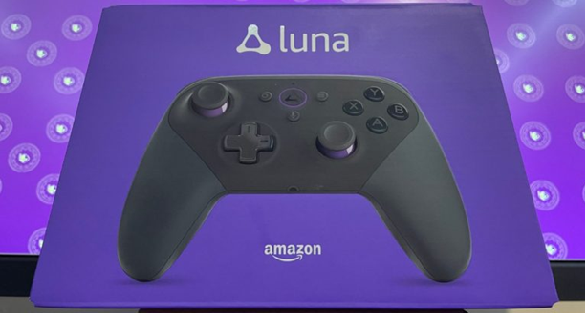
The secret weapon in Luna’s arsenal is the Cloud Direct protocol. Traditional Bluetooth controllers send input signals to your device (PC/TV), which then relays them to the cloud. This adds two “hops” of latency. The Amazon Luna Controller connects directly to your Wi-Fi and speaks directly to the AWS server instance running your game. This bypasses the local device entirely, shaving off between 17 to 30 milliseconds of input lag—a critical reduction for cloud-based twitch gameplay.
Progressive Web App (PWA) Implementation
Unlike competitors that rely heavily on native apps, Luna largely functions as a Progressive Web App (PWA) on iOS and PC. This allows Amazon to bypass Apple’s restrictive App Store policies for cloud gaming, ensuring that iPhone and iPad users have the same feature parity as Android users.
The Channel Model: Pricing & Content Strategy
Amazon Luna utilizes a “Channels” system, similar to Prime Video add-ons. This modular approach allows users to pay only for the content they want.
| Channel / Tier | Price (Est. 2026) | Key Features |
|---|---|---|
| Prime Gaming (Base) | Included w/ Prime | Rotating selection (10-15 games/month), Fortnite, Fallout titles, GOG library access. |
| Luna+ | $9.99 / month | Access to 100+ curated games across genres (Resident Evil, Control, Sonic). |
| Ubisoft+ | ~$17.99 / month | Day-1 access to Ubisoft AAA titles (Assassin’s Creed, Far Cry) including DLCs. |
| Jackbox Games | ~$4.99 / month | Dedicated party game channel for social play. |
The GOG Integration: A Game Changer
As of mid-2025, the integration with GOG has fundamentally changed the value proposition. Users who own games on GOG (CD Projekt Red’s digital storefront) can link their accounts to Luna. If you own a supported title—like Cyberpunk 2077 or The Witcher 3—you can stream it on Luna without rebuying it, provided you have a Prime or Luna+ subscription. This moves Luna toward the coveted “PC Companion” status held by GeForce Now.
Performance & User Experience
Resolution and Bitrate
Amazon Luna currently targets a stable 1080p at 60fps. While adequate for Fire TV sticks and mobile screens, it falls short of the 4K/120fps benchmarks set by NVIDIA’s GeForce Now Ultimate tier. For the average consumer, however, the stability provided by AWS often outweighs the lack of 4K pixels. The stream automatically adjusts bitrate based on network health, typically requiring 10Mbps for 1080p streaming.
Device Ecosystem
Luna’s “everywhere” strategy is aggressive. Supported endpoints include:
- Fire TV Devices: The native home of Luna.
- Samsung & LG Smart Hubs: Native apps pre-installed on 2023-2026 models.
- Mobile: iOS (via Safari PWA) and Android.
- PC/Mac/Chromebook: Via Chrome or Edge browsers.
Competitive Landscape: Luna vs. The Giants
How does Amazon’s offering stack up against the heavy hitters from Microsoft and NVIDIA?
| Feature | Amazon Luna | NVIDIA GeForce Now | Xbox Cloud Gaming |
|---|---|---|---|
| Primary Value | Convenience for Prime Members | High-End PC Performance | Game Library (Game Pass) |
| Max Resolution | 1080p / 60fps | 4K / 120fps (Ultimate) | 1080p / 60fps |
| Game Ownership | Mix (Sub + GOG/Ubisoft Linked) | BYO (Steam/Epic/GOG) | Subscription (Game Pass) |
| Best For | Fire TV / Casual Gamers | Hardcore PC Gamers | Console Gamers |
Key Takeaways: The 2026 Verdict
Amazon Luna has successfully carved out a niche by not trying to out-power NVIDIA or out-publish Microsoft. Instead, it focuses on ecosystem friction reduction. If you are one of the millions of households with a Fire TV stick and a Prime membership, Luna is essentially a free console sitting in your cloud. The addition of GOG support has addressed the critical “library ownership” concern, making it a viable secondary platform for PC gamers.
Pro Tip: For the lowest possible latency, invest in the dedicated Luna Controller. Its ability to connect directly to Wi-Fi bypasses local Bluetooth stack processing, offering a feel that is perceptibly closer to local hardware.
Advanced Topical Map
For SEO entities and semantic relevance, the following hierarchy represents the Luna ecosystem:
- Core Entity: Amazon Luna (Cloud Gaming Service)
- Infrastructure: AWS, NVIDIA T4, Windows Server, Edge Computing.
- Connectivity: Cloud Direct, WebRTC, 5G Optimization.
- Content Partners: Ubisoft+, GOG (CD Projekt), Jackbox Games, Twitch.
- Hardware: Luna Controller, Fire TV Stick 4K Max, Fire Tablet.
Sources & References
- •
Amazon Luna Official Website - •
GOG.com Support Center – Luna Integration - •
AWS Case Studies: Amazon Luna Architecture - •
Android Police: Amazon Luna Expansion 2025
One Comment