Google Antitrust EU: 2026 Status on Fines, Breakups & DMA Compliance
Executive Insights
- September 2024 marked the end of the 15-year Google Shopping case with a final loss for Google and a confirmed €2.4bn fine.
- Google successfully appealed the AdSense fine (€1.49bn), which was annulled by the General Court in late 2024.
- A new record fine of €2.95 billion was imposed in September 2025 for Ad Tech abuses.
- Google is currently negotiating remedies to avoid a forced breakup of its advertising business.
- The EU is actively investigating Google for DMA non-compliance regarding the Play Store and Search ranking policies.
As of early 2026, the antitrust battle between Google (Alphabet Inc.) and the European Union has entered a critical new phase. While the “Big Three” historical cases—Shopping, Android, and AdSense—have largely reached their judicial conclusions, a new front has opened regarding the Digital Markets Act (DMA) and a massive 2025 fine targeting Google’s ad technology stack.
This report analyzes the current status of Google’s legal challenges in Europe, breaking down the final court rulings of 2024, the record-breaking penalties of 2025, and the ongoing threat of a structural breakup.
The "Big Three" Legacy Cases: Final Verdicts
Between 2017 and 2019, the European Commission imposed over €8 billion in fines across three major cases. By late 2025, the European courts had delivered final or near-final judgments on these historic battles.
| Case | Initial Fine | Status (Jan 2026) | Outcome |
|---|---|---|---|
| Google Shopping | €2.42 Billion | Final (Sept 2024) | Google Lost. The European Court of Justice (ECJ) dismissed Google’s final appeal, confirming the fine for self-preferencing its own shopping service. |
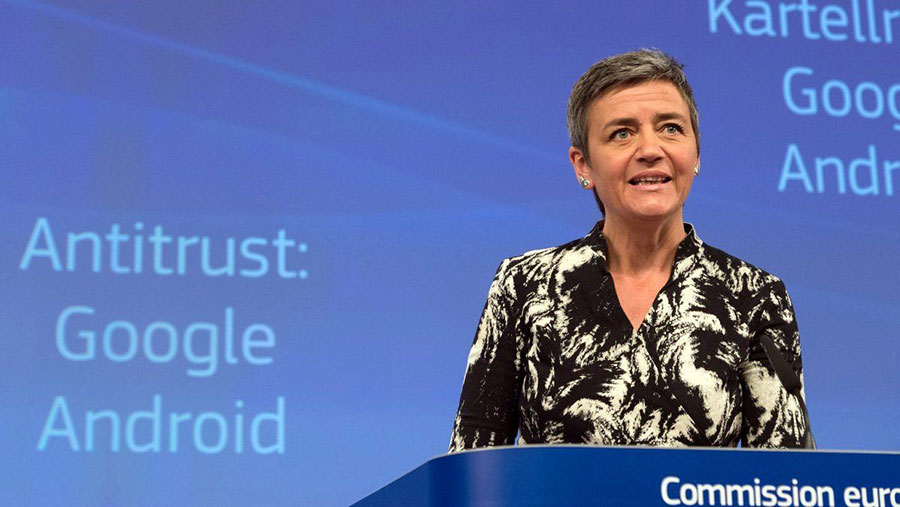
| Android | €4.34 Billion | Upheld (Revised) | Google Lost. The General Court largely upheld the fine (reduced slightly to €4.1bn) for forcing manufacturers to pre-install Chrome and Search. |
| AdSense | €1.49 Billion | Annulled (Sept 2024) | Google Won. The General Court annulled the fine, ruling the Commission failed to prove that Google’s exclusivity clauses harmed consumers or innovation during the specific period. |
The Shopping Judgment (Sept 2024)
On September 10, 2024, the ECJ delivered a decisive blow to Google, bringing the 15-year Shopping saga to an end. The court confirmed that Google abused its dominant position by favoring its own comparison shopping service over rivals like Kelkoo and Foundem in search results. This ruling set a binding legal precedent: self-preferencing by a dominant platform is illegal under EU law.
The AdSense Reversal (Sept 2024)
Just a week after the Shopping defeat, Google secured a rare victory. The EU General Court annulled the €1.49 billion AdSense fine. The court found that while Google did restrict publishers from using rival search ads, the Commission had not sufficiently demonstrated that these contracts actually deterred innovation or caused consumer harm in the specific market context of 2016. The Commission has faced pressure to strengthen its economic analysis in future cases.
The Ad Tech Investigation & The Breakup Threat (2025-2026)
While the legacy cases are settling, the war over advertising technology (Ad Tech) has escalated. In September 2025, the European Commission fined Google €2.95 billion for abusing its dominance across the entire ad tech supply chain (intermediating between advertisers and publishers).
Why This Case is Different
Unlike previous cases where fines were the primary tool, the Commission initially suggested that behavioral remedies would be insufficient and that a partial breakup (divestiture) of Google’s ad business might be necessary. This aligned with similar DOJ actions in the United States.
- The Charge: Google favored its own ad exchange (AdX) in auctions run by its publisher tools (DFP) and advertiser tools (Google Ads), effectively “rigging” the auctions.
- The Remedy Offer (Nov 2025): To avoid a forced breakup, Google proposed significant changes to its auction mechanics, including allowing publishers more flexibility in pricing and interoperability with rival exchanges.
- Current Status: As of January 2026, the Commission is stress-testing these proposals. If they fail to restore competition, the EU retains the power to order a structural separation.
The Digital Markets Act (DMA): Non-Compliance Probes
Beyond antitrust fines, Google must now comply with the Digital Markets Act (DMA), which imposes ex-ante rules on “gatekeepers.” In 2025, the Commission launched aggressive non-compliance investigations.
1. The “Steering” Charge (Google Play)
In March 2025, the Commission issued preliminary findings that Google Play violates the DMA by preventing app developers from “steering” users to cheaper offers outside the app store. This mirrors the high-profile conflict with Epic Games and Spotify.
2. Site Reputation Abuse (Nov 2025)
In a novel investigation opened in late 2025, the EU is probing Google’s “Site Reputation Abuse” policy. This policy update demoted third-party commercial content (like coupon pages hosted on news sites) in Search. While Google argues this combats spam, the EU is investigating whether this disproportionately targets publishers’ revenue streams to favor Google’s own commercial widgets.
US-EU Geopolitical Tension
The aggressive stance of the outgoing Vestager commission in late 2025 sparked tension with the US administration. Reports in early 2026 suggest potential trade friction, with the US viewing the targeted fines against Google, Apple, and Meta as protectionist. However, the EU maintains that its actions are strictly based on competition law enforcement.
In-Depth Q&A
Q: Did the EU break up Google in 2026?
No, Google has not been broken up as of early 2026. However, in September 2025, the EU Commission threatened a breakup regarding Google’s Ad Tech business. Google has since offered behavioral remedies to avoid divestiture, which are currently under review.
Q: What was the final outcome of the Google Shopping EU case?
Google lost the final appeal. On September 10, 2024, the European Court of Justice upheld the €2.42 billion fine, confirming that Google illegally favored its own shopping service over competitors.
Q: Did Google win any EU antitrust appeals?
Yes. In September 2024, the EU General Court annulled the €1.49 billion fine related to AdSense, ruling that the Commission failed to prove consumer harm during the specific period investigated.
Q: What is the new Google investigation about in 2026?
The latest major investigation (opened Nov 2025) concerns Google’s ‘Site Reputation Abuse’ policy. The EU is probing whether demoting third-party content on publisher sites (like coupons) violates the Digital Markets Act.