AI Data Centers 2026: The Shift to 100kW+ Liquid-Cooled AI Factories
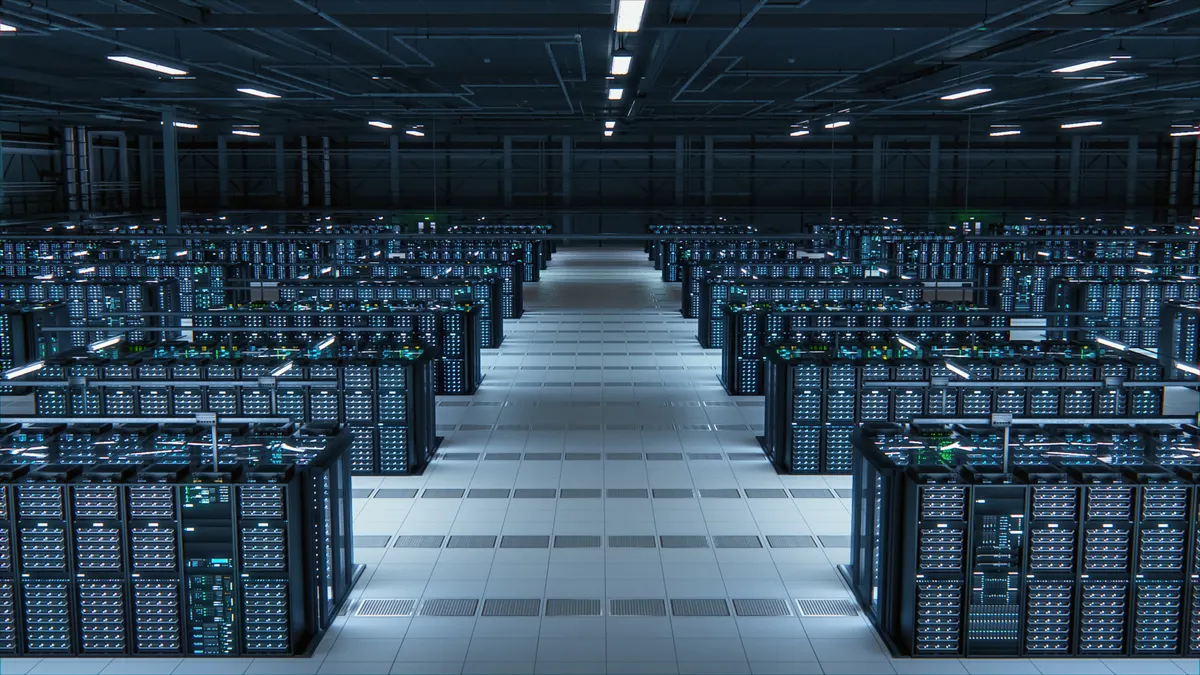
Executive Insights
- AI racks now consume 100kW+, a 10x increase over traditional IT infrastructure.
- Liquid cooling is no longer optional; it is mandatory for NVIDIA Blackwell and future GPU generations.
- Major tech firms are bypassing the electrical grid by co-locating directly with nuclear power plants.
- The market is shifting from ‘Training’ dominance to ‘Inference’ dominance in 2026, altering location strategies.
- Structural engineering for data centers must now account for heavier liquid-cooled racks and on-site power generation.
The era of the general-purpose data center is ending. In its place rises the AI Factory—a specialized industrial facility designed not to store files, but to generate intelligence. By early 2026, the architectural divergence between traditional IT infrastructure and AI data centers has become absolute, driven by a single, crushing variable: power density.
While traditional enterprise racks idle at 8-12 kilowatts (kW), AI clusters driven by NVIDIA Blackwell and custom hyperscale silicon are pushing routine densities beyond 100 kW per rack, with roadmaps aiming for 1 megawatt per rack by 2028. This 10x surge in energy density has rendered air cooling obsolete for high-performance computing (HPC) and forced a trillion-dollar pivot toward liquid cooling, nuclear baseload power, and 800-volt power distribution architectures.
The Core Divergence: AI Factories vs. Traditional Data Centers
An AI data center is fundamentally different from the facilities that powered the cloud era. The primary distinction lies in the workload: AI models require massive parallel processing (training) or rapid-fire token generation (inference), both of which demand that thousands of GPUs operate as a single supercomputer.
This “megacluster” requirement forces architectural changes at every layer, from the fiber optic cabling to the concrete foundation.
| Feature | Traditional Data Center (Cloud/Enterprise) | AI Data Center (AI Factory) |
|---|---|---|
| Primary Compute | CPU (Serial Processing) | GPU / TPU / NPU (Parallel Processing) |
| Rack Power Density | 8 kW – 12 kW | 40 kW – 120 kW+ (e.g., NVIDIA NVL72) |
| Cooling | Raised Floor Air Cooling (CRAC/CRAH) | Direct-to-Chip Liquid Cooling / Immersion |
| Networking | Ethernet (Leaf-and-Spine) | InfiniBand / Ultra-Ethernet (800G/1.6T) |
| Power Source | Grid + Diesel Generators | Grid + Nuclear / SMRs / On-site Generation |
| Latency Focus | North-South (User to Server) | East-West (GPU to GPU) |
The Blackwell Effect: Power Density Realities
The release of NVIDIA’s Blackwell architecture has established a new baseline for facility requirements. The GB200 NVL72, a rack-scale system connecting 72 GPUs via NVLink, consumes approximately 120 kW of power in a single cabinet. To put this in perspective, a standard legacy data center can only support 5-10 kW per rack. Deploying modern AI hardware in a legacy facility requires leaving 90% of the floor space empty to prevent thermal runaway.
- Voltage Shifts: To deliver this much power without massive copper loss, facilities are shifting from 208V to 415V or even 800V DC power distribution architectures.
- Structural Weight: High-density liquid-cooled racks weigh significantly more than air-cooled servers (often exceeding 2,500 lbs), requiring reinforced concrete floors.
Thermal Management: The Liquid Cooling Mandate
Air cooling hits a physical wall at roughly 30-40 kW per rack. Beyond this, the velocity of air required to cool the chips creates acoustic issues (deafening noise) and energetic inefficiencies.
As of 2026, Direct-to-Chip (DTC) liquid cooling has become the standard for Tier 1 AI facilities. In this setup, cold plates sit directly on the GPUs, circulating fluid to remove heat. This method captures 70-80% of the heat directly, which can then be reused for district heating or industrial processes.
Immersion Cooling—submerging entire servers in non-conductive dielectric fluid—remains a niche but growing solution for edge inference nodes where maintenance access is less frequent.
The Energy Crisis: Nuclear & Behind-the-Meter Strategies
The defining constraint of the AI era is not silicon, but electrons. A massive AI training cluster can consume as much electricity as a small city (500 MW+). Utility grids, constrained by transmission bottlenecks, cannot connect these loads fast enough (wait times often exceed 3-5 years).
This bottleneck has triggered a wave of “Behind-the-Meter” power deals, where hyperscalers co-locate data centers directly at power plants to bypass the public grid.
- Microsoft & Three Mile Island: A 20-year deal to restart Unit 1 specifically to power Microsoft’s AI operations, guaranteeing 835 MW of carbon-free baseload.
- Amazon & Talen Energy: A $650 million acquisition of a data center campus directly connected to the Susquehanna nuclear plant in Pennsylvania.
- Google & SMRs: Agreements with Kairos Power to deploy small modular reactors (SMRs) by 2030 to decouple from grid volatility.
Workload Evolution: Training vs. Inference
While 2023-2024 was dominated by Training (building the models), 2026 marks the dominance of Inference (running the models). Inference workloads are forecasted to account for two-thirds of AI compute cycles this year.
- Training Clusters: Locate where power is cheapest and most abundant (e.g., rural Midwest, Nordics). Latency to the user does not matter.
- Inference Clusters: Must be located closer to the end-user (Edge/Metro) to ensure low latency for applications like real-time voice agents and autonomous systems. This bifurcates the real estate strategy into “Massive Gigawatt Campuses” (Training) and “High-Density Metro Zones” (Inference).
Future Outlook: The Megawatt Rack
The industry is already preparing for the next leap. Innovations in vertical power delivery and two-phase immersion cooling are paving the way for racks that consume 1 Megawatt of power. These systems will likely resemble chemical processing plants more than traditional server rooms, with coolant piping replacing air ducts entirely.
In-Depth Q&A
Q: What is the power consumption per rack in an AI data center?
While traditional data center racks consume 5-12 kW, modern AI racks utilizing NVIDIA Blackwell or H100 architectures typically consume between 40 kW and 120 kW per rack. Future projections for 2027-2028 estimate densities reaching 250 kW to 1 MW per rack.
Q: Why do AI data centers require liquid cooling?
Air cooling becomes inefficient and physically impractical beyond 30-40 kW per rack. AI chips like GPUs generate concentrated heat that requires the superior thermal transfer properties of liquid (which is ~3,000x more effective at carrying heat than air) to maintain operational temperatures and prevent throttling.
Q: How are AI data centers powering their operations?
Due to grid congestion, major operators (Microsoft, Amazon, Google) are signing “behind-the-meter” deals to co-locate data centers directly at nuclear power plants or investing in Small Modular Reactors (SMRs) to secure 24/7 baseload power without relying on public transmission lines.
Q: What is the difference between training and inference data centers?
Training data centers are massive, centralized facilities located where power is cheapest (latency is irrelevant). Inference data centers are smaller, distributed facilities located near population centers to ensure low latency for real-time user interactions with AI models.
Q: What is an AI Factory?
Coined by NVIDIA CEO Jensen Huang, an AI Factory is a data center purpose-built for generating intelligence. Unlike traditional data centers that support multiple disparate applications, an AI Factory operates as a singular, massive supercomputer dedicated to processing AI models.