Gasoline Prices Hit Record High for Labor Day Holiday Weekend 2026
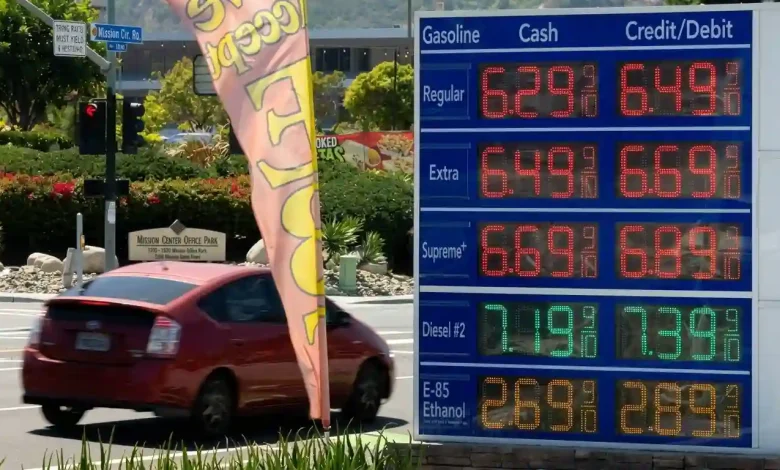
Table of Contents
Gasoline prices are rewriting the record books as millions of American drivers hit the road for the traditional end-of-summer travel weekend. Driven upward by a persistent military conflict in the Middle East and widening global supply shocks, the national average fuel cost is poised to reach a historical high for this late-summer holiday. According to fuel-savings platform GasBuddy and its head petroleum analyst, Patrick De Haan, the projected national average gasoline price is expected to settle around $4.03 per gallon on Labor Day. This mark comfortably surpasses the previous nominal Labor Day record of $3.83 per gallon set back in 2012, highlighting a sharp and painful trend for household budgets as the fall season approaches.
The current surge represents an incredibly sharp divergence from the relative affordability of the past few years. Just last year, Americans enjoyed the cheapest Labor Day weekend driving season since the pandemic, with fuel prices averaging a manageable $3.16 per gallon. Now, motorists are facing prices nearly a dollar higher per gallon, pushing household fuel costs up by an average of $60 to $80 per month. Economists note that this sudden spike is rooted not in localized issues, but in a sweeping, systemic global oil supply crisis that has severely squeezed energy flows and altered refinery operations worldwide.
At the core of the problem is the intersection of geopolitical hostilities and physical supply routes. For months, escalating regional conflicts in the Middle East have threatened key maritime corridors, while targeted drone strikes in Eastern Europe have taken substantial refining capacity offline. This high-pressure environment has created a disconnect between physical raw crude extraction and the actual distribution of processed automotive fuels, keeping pump prices elevated even when global crude prices experience brief, temporary retreats.
The Unprecedented Surge of Labor Day Gasoline Prices
To understand the current retail environment, one must look at how retail gasoline prices are structured. For the average American consumer, the $4.00-a-gallon mark is not just a statistical threshold; it represents a major psychological “pain point.” Everyday expenses become significantly harder to manage when fuel costs climb, directly influencing public sentiment regarding inflation and consumer spending. According to reports compiled by Reuters, fuel prices in early September were already hovering near $4.13 to $4.15 per gallon nationally, marking the highest late-summer levels ever recorded. De Haan has pointed out that although gasoline prices are below the all-time high of $5.00 set in mid-2022, they are uniquely elevated for the month of September, setting a worrying precedent for the autumn months.
Dissecting the Geopolitical Catalysts Behind the Price Surge
The primary catalyst behind the escalating cost of automotive fuel is a fragile geopolitical landscape that shows no signs of stabilizing. Energy analysts point directly to a multi-theater conflict that has disrupted traditional trading channels and triggered defensive supply maneuvers. A major driver of the premium on crude oil has been the tightening of U.S. sanctions against Iran, designed to curtail the state’s nuclear development and regional activities. As these restrictions tighten, the threat of direct retaliation increases, raising the risk premium for oil shipments transiting critical choke points.
Escalating Hostilities in the Strait of Hormuz
Perhaps the most critical chokepoint for global oil is the Strait of Hormuz, a narrow waterway through which roughly a fifth of the world’s petroleum consumption passes daily. Recent military hostilities in this zone have directly threatened commercial shipping, including tankers. The risk of sudden blockades or physical attacks has forced shipping lines to purchase exorbitant war-risk insurance premiums, or reroute vessels entirely, drastically increasing transport times and freight costs. These shipping anxieties have a direct transmission mechanism to financial markets, impacting the delicate relationship between oil and bond yields and adding inflationary pressures across the broader domestic financial system.
Refineries Under Fire: Drone Strikes in Russia
Compounding the Middle Eastern volatility is the ongoing conflict in Eastern Europe. Specifically, Ukrainian drone strikes on major Russian refineries have taken millions of barrels of processing capacity offline. Russia, while heavily sanctioned, remains a crucial exporter of refined petroleum products and middle distillates to global markets. The loss of this infrastructure has thinned the global inventory of gasoline, diesel, and jet fuel, shifting buyer demand to other refining centers. With fewer operational refineries to meet international demand, prices for finished fuels have risen far faster than raw crude oil. The resulting fear of product shortages has deepened the sense of uncertainty, raising concerns over growing geopolitical hostilities and their direct impact on the energy grid.
The Refining Bottleneck and the Crack Spread Surge
A critical aspect of the current price hike is the “crack spread”—the profit margin that oil refineries earn by converting raw crude oil into usable fuels like gasoline and diesel. Due to global refinery disruptions, these spreads have surged to record levels. Even when raw crude prices occasionally slip, refining capacity limits prevent those savings from reaching retail pumps. Currently, U.S. refineries are running near maximum capacity, with average utilization rates hovering at a striking 98%—a level of processing activity not seen since 2018.
Operating at near-peak capacity leaves the refinery network highly vulnerable to unscheduled maintenance, extreme weather events, or regional outages. There is essentially zero slack in the domestic production system to absorb any sudden operational failures. At the same time, national gasoline inventories have continued to fall, dropping by 1.2 million barrels to 205.7 million barrels according to the latest figures from the Energy Information Administration (EIA). This is notably below the five-year average of 217.6 million barrels, making the system highly sensitive to minor market movements in volatile energy markets.
Historical Context: Comparing Labor Day Fuel Costs
To contextualize the financial pain currently felt by American consumers, it is helpful to review the historical trajectory of Labor Day fuel prices over the last five years. Labor Day serves as a vital benchmark for end-of-summer consumer activity, and this year’s high highlights how drastically the market has shifted.
The table below outlines the historical national average prices for regular gasoline on Labor Day, demonstrating the extreme swings in pricing from the pandemic era to the current geopolitical crisis.
| Year | Average Labor Day Price (per gallon) | Key Economic & Geopolitical Context |
|---|---|---|
| 2022 | $3.79 | Post-pandemic supply disruptions and early stages of Ukraine war. |
| 2023 | $3.77 | Strong seasonal summer demand and high domestic refining utilization. |
| 2024 | $3.29 | Stabilizing crude supply and cooling global economic demand. |
| 2025 | $3.16 | Strong domestic oil production and localized gasoline inventory surplus. |
| 2026 (Projected) | $4.03 | Middle East war, Strait of Hormuz tensions, and refinery drone strikes. |
As the data shows, the 2026 holiday weekend represents an unprecedented high in nominal terms, eclipsing even the inflationary post-pandemic periods of 2022 and 2023. This upward trend highlights how deeply vulnerable the global supply chain remains to external military and political shocks.
Macroeconomic Implications: Inflation, Diesel Records, and Travel Decisions
High fuel prices act as an indirect tax on consumer spending, immediately reducing the disposable income of average households. When a family must allocate $60 to $100 more per month to keep their vehicles running, that capital is directly diverted away from retail, hospitality, and entertainment. This shifting consumer pattern is particularly noticeable during holiday weekends when retail spending usually surges. Furthermore, the pricing pressure is not confined to passenger vehicles; diesel prices have also reached historic highs, touching an average of $5.85 per gallon. Because diesel is the primary fuel for commercial shipping trucks, agricultural equipment, and trains, this surge guarantees that the shipping costs of physical goods will remain high, keeping upward pressure on core inflation metrics.
Additionally, the rise in fuel costs has significantly impacted commercial air travel. With jet fuel prices tracking the upward trajectory of benchmark Brent crude oil prices, airlines have been forced to adjust ticket pricing. According to AAA, average airline ticket costs for Labor Day weekend travelers are roughly 20% higher than last year, making both driving and flying significantly more expensive for American families looking to enjoy a final summer getaway.
The Political Fallout: Midterm Campaigns and Presidential Undercurrents
With high gas prices serving as a constant, highly visible reminder of economic strain, the energy crisis has quickly taken center stage in the national political dialogue. The timing could not be more critical, as local and national political organizations kick off their campaigns for the upcoming midterm Congressional elections. Historically, high fuel prices at the pump have acted as a direct liability for the party in power, shaping voter perceptions of economic competence and governance.
Candidates participating in crucial midterm primary campaigns are already shaping their economic platforms around the core issues of energy independence, inflation control, and domestic refining capacity. Republicans are pointing to the record-high fuel averages as evidence of flawed policy, while Democrats are attempting to balance environmental priorities with the immediate economic demands of a frustrated electorate.
Energy Policies Under the Microscope
President Donald Trump and his administration have faced persistent pressure to deliver on their promises of lowering energy costs. In recent weeks, Trump has intensified his public criticism of petroleum refiners and retail fuel sellers, accusing them of maintaining artificially high margins and profiting off the backs of everyday consumers. However, the administration has also had to defend its geopolitical posture. In mid-August, Trump made a controversial statement suggesting that Americans should be willing to pay a “tiny little bit more” at the pump if it ensured that adversaries like Iran were prevented from obtaining nuclear capabilities. This complex rhetoric highlights the delicate balance between foreign policy objectives and domestic economic stability.
Rising Legislative Pressure and Voter Sentiment
As the election cycle heats up, congressional leaders are scrambling for legislative answers to appease their constituents. In swing states and heavily contested districts, the pressure to demonstrate concrete action is immense. Lawmakers are discussing a variety of temporary measures, including gas tax holidays, emergency releases from regional reserves, and investigations into retail price gouging.
This legislative climate has amplified the rising legislative influence of energy-producing states, whose representatives argue that long-term relief can only be achieved by boosting domestic drilling permits and streamlining the environmental review process for new refinery infrastructure. Until these fundamental supply issues are resolved, short-term policy interventions are unlikely to deliver lasting relief to the average consumer.
Strategic Consumer Adaptation in a High-Price Environment
Faced with persistent pricing pressure, American motorists are taking matters into their own hands, adopting highly calculated strategies to minimize their fuel expenditures. This shift in consumer behavior includes utilizing mobile price-tracking applications, planning highly optimized routes, and scaling back non-essential holiday travel. Many families are opting for “staycations” or traveling to nearby regional parks rather than embarking on multi-state road trips.
Fortunately, some seasonal relief is on the horizon. Following the conclusion of the Labor Day weekend, national gasoline demand typically declines as the summer driving season winds down and school semesters resume. Furthermore, after September 15, federal environmental regulations allow fuel retailers in many parts of the country to switch back to cheaper, winter-blend gasoline, which does not require the expensive additives used to prevent evaporation in hot summer temperatures. While these seasonal factors are expected to pull national averages down in the coming weeks, ongoing geopolitical tensions in the Middle East and Eastern Europe will likely keep a high baseline under fuel costs, reminding consumers and politicians alike of the fragile nature of global energy security.