Costco 2026 Updates: Q2 Earnings, Expansion & Kirkland
Costco Wholesale Corporation continues to command the retail sector with an ironclad business model, proving once again why it remains the undisputed king of the warehouse club industry. In an era marked by shifting consumer behaviors, persistent macroeconomic uncertainties, and relentless retail competition, the big-box behemoth has not only weathered the storm but has actively redefined the paradigm of value-driven shopping. As we navigate through 2026, the company’s trajectory showcases a masterful blend of strategic physical expansion, cutting-edge digital transformation, and an unwavering commitment to private-label excellence. From unprecedented quarterly earnings to sweeping changes in the beloved food court, the narrative surrounding the brand in 2026 is one of aggressive growth and calculated modernization. This comprehensive analysis dives deep into the financial health, operational strategies, technological adoptions, and consumer-centric adjustments that are actively shaping the future of the world’s most recognizable membership-based warehouse club.
Costco Financial Performance and Q2 2026 Earnings
The financial architecture of the company is arguably one of the most heavily scrutinized elements in modern retail, and the second quarter of fiscal 2026 has delivered nothing short of spectacular results. Operating in a highly competitive macroeconomic environment, the retailer managed to shatter Wall Street expectations, showcasing robust top-line revenue growth and impressive bottom-line profitability. According to the Q2 2026 earnings report, net sales surged by 9.1 percent, reaching an astounding $68.24 billion, up from $62.53 billion during the same period in the previous year. This substantial influx of revenue is indicative of the company’s unparalleled pricing power and its unique ability to drive high-volume foot traffic despite broader inflationary pressures that have crippled other retail segments.
| Metric | Q2 2025 | Q2 2026 | YoY Growth |
|---|---|---|---|
| Net Sales | $62.53 Billion | $68.24 Billion | +9.1% |
| Net Income | $1,788 Million | $2,035 Million | +13.8% |
| Diluted EPS | $4.02 | $4.58 | +13.9% |
| E-Commerce Sales | Baseline | Accelerated | +22.6% |
Furthermore, net income for the quarter stood at a staggering $2,035 million, translating to $4.58 per diluted share. This represents a marked increase from the $1,788 million, or $4.02 per diluted share, recorded in Q2 2025. The comparable sales metrics further solidify this triumph, with company-wide comparable sales growing by 7.4 percent. The United States market saw a 5.9 percent increase, while Canadian operations jumped by 10.1 percent, and Other International markets skyrocketed by an impressive 13.0 percent. When investors analyze these historical financial metrics, it becomes abundantly clear that the foundational strategy of operating on razor-thin product margins while deriving the bulk of operating profit from membership fees is functioning flawlessly.
Costco Expands Global Footprint with 35 New Warehouses in 2026
While some retail giants are cautiously scaling back their physical footprints in favor of purely digital avenues, the warehouse club is aggressively doubling down on brick-and-mortar investments. Following a successful year that saw the addition of 24 new warehouses in 2025, CEO Ron Vachris and the executive leadership team have established an ambitious target to open 35 new locations throughout 2026. This aggressive physical expansion is not merely about planting flags in new zip codes; rather, it is a highly calculated real estate maneuver designed to alleviate congestion in extremely high-volume stores while simultaneously capturing untapped demographics in emerging suburban and international markets.
The 2026 expansion strategy also introduces innovative warehouse formats. For instance, the company recently unveiled a showroom-style warehouse in Alaska. Unlike traditional locations where members walk out with overflowing carts, this showroom allows members to physically examine bulky items like furniture, appliances, and electronics before finalizing their purchases online for home delivery. Furthermore, the spring of 2026 will witness the launch of a first-of-its-kind standalone gas station in Mission Viejo, California. This decoupling of the wildly popular fueling stations from the main warehouse structures signals a strategic shift aimed at capturing commuter revenue without exacerbating parking lot gridlock at established store locations. Such geographic and structural diversification underscores a brand that is meticulously tuning its physical assets for maximum yield.
Kirkland Signature Strategy: Supply Chain Control and New Product Launches
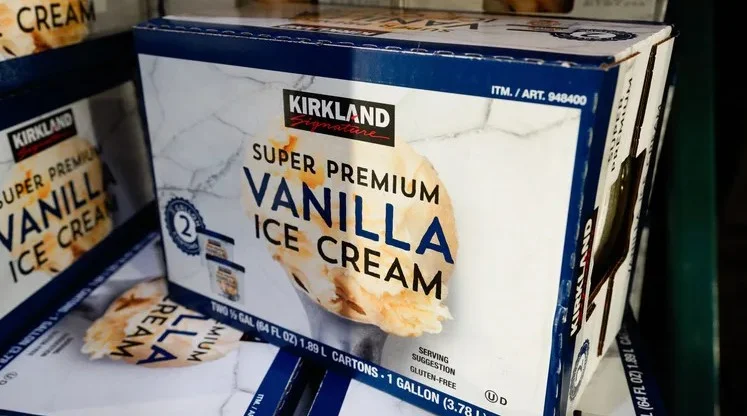
At the very heart of the retailer’s value proposition is its ubiquitous private label, which has quietly transformed into one of the most powerful consumer brands in the world. During the 2026 earnings calls, CFO Gary Millerchip emphasized that enhancing Kirkland Signature remains a paramount focus for the company. The strategy is straightforward yet incredibly effective: provide members with products that offer a 15 to 20 percent value advantage over national brand equivalents without ever compromising on quality. However, the underlying mechanics of this strategy have evolved significantly in recent months.
To combat supply chain disruptions and volatile commodity pricing, the company is systematically taking greater control over its manufacturing and distribution networks. By vertically integrating the production of key private-label items, the retailer can insulate its members from sudden price shocks. This enhanced supply chain control allows the company to maintain its strict pricing discipline. Even as the cost of raw materials fluctuates globally, the private label continues to serve as a reliable anchor, ensuring that the perceived value of the membership remains exceptionally high. The meticulous curation of these products—ranging from premium olive oils to household paper goods—acts as the ultimate retention tool, reinforcing the trust that millions of shoppers place in the brand on a weekly basis.
Kirkland Signature Energy Drinks Challenge the Market
The private label’s dominance is currently expanding into highly competitive new product categories, most notably the multi-billion-dollar energy drink sector. In early 2026, the company disrupted the beverage aisle by launching Kirkland Signature Sparkling Energy Drinks. Packaged in a 24-count variety pack featuring Tropical, Orange, and Peach flavors, these beverages retail for a fraction of the cost of leading national brands, breaking down to approximately 70 cents per can. Boasting 200mg of caffeine, zero sugar, and merely 10 calories, the product is directly targeting the health-conscious demographic that has traditionally remained loyal to premium brands. This aggressive entry into the energy drink market immediately impacted industry competitors, proving that the warehouse club possesses the sheer scale and brand equity necessary to instantaneously capture market share in saturated consumer packaged goods categories.
Technology and In-Store Innovations: The Era of Scan-and-Go
Technological stagnation has long been a minor criticism levied against the warehouse club, but 2026 marks a watershed moment in the company’s digital evolution. Recognizing that long checkout lines represent the single biggest friction point for its members, the retailer is actively testing and rolling out scan-and-go capabilities through its mobile application. This transformative in-store innovation empowers members—particularly those making quick trips for a handful of items—to scan barcodes with their smartphones, pay digitally, and bypass the traditional cashier lanes entirely.
Beyond checkout efficiency, the company is digitizing several legacy systems that have frustrated shoppers for years. The bakery and deli departments are undergoing a digital renaissance, with the introduction of kiosk-based and app-based ordering systems for custom cakes and party platters. This modernization eliminates the archaic process of filling out paper slips and dropping them in a physical box, streamlining the workflow for both employees and consumers. By embracing these pragmatic technological solutions, the retailer is actively modernizing the warehouse experience, ensuring that it meets the expectations of a younger, tech-savvy generation of shoppers without alienating its core demographic.
Food Court Changes: Membership Scanners and Menu Shakeups
Perhaps the most talked-about adjustments occurring in 2026 revolve around the company’s famous food court. The beloved $1.50 hot dog and soda combo remains the ultimate loss leader, but the rules of engagement have officially changed. After successful pilot programs in select regions, the company is executing a nationwide rollout of membership-card scanners at all food court kiosks. This strict enforcement ensures that heavily subsidized food items remain an exclusive perk for dues-paying members, effectively shutting out non-members who historically took advantage of the open-access outdoor food courts.
While the enforcement of membership rules has sparked lively debates across social media platforms, the financial rationale is airtight. The food court is designed to reward loyalty, not to feed the general public at a loss. In a silver-lining update that has thrilled frequent shoppers, Executive members can now accrue their 2 percent cash-back rewards on all food court purchases—a perk that seamlessly integrates the dining experience into the broader membership value proposition. This structural change reinforces the exclusivity of the club and incentivizes lower-tier members to consider upgrading their membership status.
The Return of the Churro Sundae and Bakery Enhancements
The food court and bakery sections are also experiencing a whirlwind of menu innovations and seasonal shakeups. The debut of the Caramel Churro Sundae in 2026—featuring soft-serve ice cream heavily drizzled with salted caramel and topped with mini churro bites—has generated massive buzz, serving as a wildly popular replacement for the polarizing mint chocolate chip sundae. Inside the warehouse, the bakery department is currently riding an unprecedented hot streak. The introduction of the Brownie Walnut Pie, the dangerously decadent Chocolate Chip Cookie Bar Cake, and the permanent return of the highly requested chocolate-hazelnut beignets have transformed the bakery into a mandatory destination for shoppers. These rotating, limited-time offerings create a powerful sense of urgency and treasure hunt excitement that drives recurrent foot traffic.
Executive Membership Value and Worldwide Renewal Rates
The true engine of this retail empire is not the volume of goods sold, but the recurring revenue generated by its deeply loyal membership base. In Q2 2026, membership fees reached an astonishing $1,355 million, reflecting a robust 13.6 percent year-over-year growth. This surge is underpinned by a worldwide renewal rate that hovers at a staggering 89.7 percent, a metric that virtually every other subscription-based business on the planet envies.
The Executive membership tier continues to be the crown jewel of this ecosystem. Representing nearly three-quarters of the company’s worldwide net sales, these premium members shop more frequently and spend significantly more per visit. By continually injecting new value into the Executive tier—such as expanded digital rewards, exclusive travel discounts, and priority access to high-demand services—the company guarantees a highly predictable and expanding pool of pure profit that insulates the broader business from the volatility of retail margins.
The Road Ahead: E-commerce Growth and Future Outlook
Looking toward the horizon, the trajectory of the company is intrinsically linked to its accelerating e-commerce capabilities. For years, the retailer approached online shopping with deliberate caution, prioritizing the in-store treasure hunt. However, the first half of 2026 indicates a dramatic paradigm shift. Digitally-enabled comparable sales surged by a remarkable 22.6 percent, driven by massive investments in delivery logistics, app functionality, and a broader online inventory that complements the warehouse selection.
The future outlook for the company involves a seamless omnichannel experience where the boundaries between the physical warehouse and the digital storefront completely dissolve. Through optimized supply chains, surgical expansions of the Kirkland Signature brand, and a steadfast refusal to compromise on the fundamental promise of unmatched value, the retailer is fundamentally redefining the limits of big-box success. As the fiscal year unfolds, competitors will undoubtedly continue to study this blueprint, but replicating the deep-rooted trust and operational mastery that this warehouse club has cultivated over decades remains an almost impossible feat.