SpaceX Acquires xAI: The $1.25 Trillion Bet on ‘Sentient Sun’ Orbital Data Centers
Executive Insights
- SpaceX acquired xAI on Feb 2, 2026, in a deal valuing the merged company at ~$1.25 trillion.
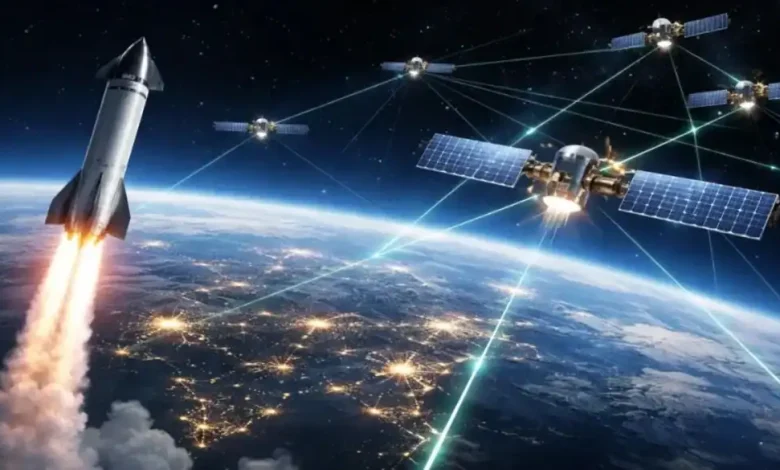
- The merger aims to build ‘Orbital Data Centers’ to solve Earth’s power and cooling limits for AI.
- Elon Musk’s ‘Sentient Sun’ plan involves up to 1 million satellites powered by unfiltered solar energy.
- Shareholders of xAI received SpaceX stock at a ratio of 0.1433 shares per xAI share.
- Competitors like Google (Project Suncatcher) and Blue Origin (TeraWave) are also entering the space-based compute market.
On February 2, 2026, SpaceX officially announced the acquisition of xAI, merging Elon Musk’s aerospace juggernaut with his artificial intelligence venture in a historic deal valuing the combined entity at approximately $1.25 trillion. This strategic consolidation marks a pivot from terrestrial AI development to a bold new frontier: Orbital Data Centers.
The “Sentient Sun” Strategy
The core rationale behind this merger is to bypass the escalating energy and cooling constraints bottlenecking AI development on Earth. Musk has termed this initiative the “Sentient Sun,” a plan to launch a constellation of up to one million solar-powered satellites that function as orbital compute nodes.
- Energy Abundance: By tapping into unfiltered solar irradiance in orbit, these data centers can access near-constant renewable energy, bypassing overburdened terrestrial power grids.
- Radiative Cooling: The cold vacuum of space offers a natural, zero-water cooling solution for high-density compute hardware, addressing one of the AI industry’s most significant environmental hurdles.
- Starship Enablement: The economic viability of this plan hinges entirely on the Starship launch system, which targets a payload capacity of 200 tons and a rapid launch cadence to deploy mass-heavy compute infrastructure at scale.
Financial Structure of the Deal
The acquisition was executed through a share-for-share exchange, solidifying the integration of Musk’s empire ahead of a highly anticipated IPO.
| Metric | Details |
|---|---|
| Combined Valuation | ~$1.25 Trillion |
| SpaceX Pre-Merger Value | ~$800 Billion |
| xAI Pre-Merger Value | ~$230 Billion |
| Exchange Ratio | 0.1433 SpaceX shares per xAI share |
| Cash Option | Select executives offered ~$75.5 per share cash-out |
Strategic Synergies & Integration
The merger creates a “vertically integrated innovation engine” that unifies four critical pillars of Musk’s ecosystem:
- Compute (xAI/Grok): Developing the foundational models and software stack.
- Transport (SpaceX Starship): Providing the exclusive heavy-lift capability to orbit.
- Connectivity (Starlink): Ensuring low-latency, high-bandwidth data transmission between orbital nodes and Earth.
- Data (X): Leveraging the real-time data hose from the social platform (acquired by xAI previously) for model training.
Competitive Landscape: The Space-AI Race
SpaceX is not alone in identifying the orbital advantage. The acquisition accelerates a new space race focused on computational supremacy.
- Google’s “Project Suncatcher”: A research moonshot utilizing “Dawn-Dusk” orbits to keep solar-powered TPU satellites in perpetual sunlight. The project emphasizes optical laser links for high-speed data transfer.
- Blue Origin’s “TeraWave”: Jeff Bezos has announced a 5,408-satellite constellation scheduled for deployment in late 2027. While primarily focused on enterprise connectivity, it lays the groundwork for Bezos’s long-term vision of gigawatt-scale orbital industrial parks.
- Starcloud: A specialized startup backed by NVIDIA that has already successfully tested an H100 GPU in orbit, validating the technical feasibility of space-based inference.
Implications for the Future
If successful, this move could transition humanity toward a Kardashev Type II civilization framework, where we begin to directly harness a star’s energy for information processing. However, it also raises significant questions regarding orbital debris, the militarization of space-based compute, and the centralization of AI infrastructure under a single private entity.
In-Depth Q&A
Q: When did SpaceX acquire xAI?
SpaceX officially announced the acquisition of xAI on February 2, 2026.
Q: What is the valuation of the combined SpaceX and xAI company?
The combined entity is valued at approximately $1.25 trillion, creating one of the world’s most valuable private companies.
Q: What is the ‘Sentient Sun’ strategy?
It is Elon Musk’s plan to launch a constellation of up to one million solar-powered satellites to serve as orbital data centers, utilizing space’s abundant solar energy and natural cooling to power AI computation.
Q: How does Starship fit into the xAI acquisition?
Starship is the critical enabler for the project, providing the massive payload capacity (200+ tons) needed to launch heavy compute infrastructure and data center hardware into orbit cost-effectively.
Q: Who are the main competitors to SpaceX’s orbital data centers?
Key competitors include Google’s ‘Project Suncatcher,’ which focuses on TPU-equipped satellites, and Blue Origin’s ‘TeraWave’ constellation, planned for late 2027.



5 Comments