Beyond the Grid: The Strategic & Cognitive Science of “Connections”
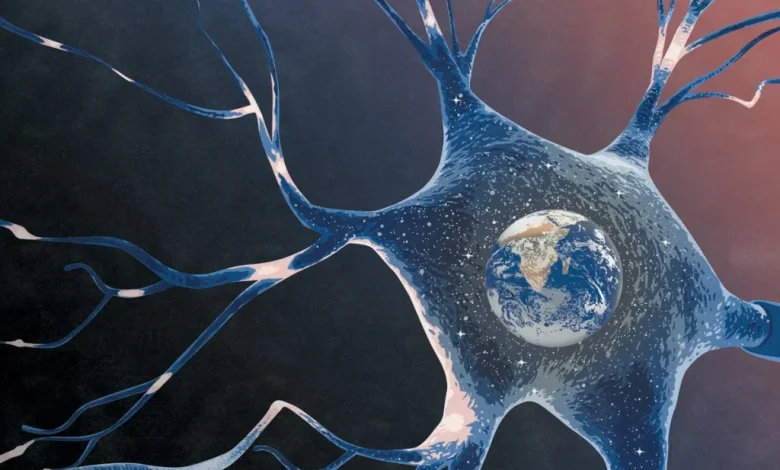
An authoritative analysis of the New York Times’ viral word puzzle, exploring gameplay mechanics, advanced strategies, and the psychology of associative thinking.
Introduction: The Evolution of Daily Rituals
In the digital landscape of January 2026, the concept of “Connections” has bifurcated into two distinct but overlapping realms: the sociological necessity of human bonding and the viral New York Times (NYT) word puzzle that has captivated millions. Since its beta launch in June 2023, Connections has transcended its status as a mere distraction to become a daily cognitive ritual, rivaling its predecessor, Wordle, in cultural significance.
Edited by Wyna Liu, the game presents a deceptively simple challenge: categorize 16 words into four distinct groups. However, beneath this 4×4 grid lies a sophisticated engine of lateral thinking and semantic ambiguity designed to test the limits of human pattern recognition. This report dissects the mechanics, psychology, and strategic nuances of Connections, offering a roadmap for mastery in the modern puzzle era.
The Mechanics of Meaning: Decoding the Grid
The core gameplay loop of Connections relies on associative reasoning rather than vocabulary breadth. Unlike crosswords, which test encyclopedic knowledge, Connections tests flexibility. The game categorizes difficulty through a color-coded system that reveals itself only upon a successful solve:
| Color Difficulty | Category Type | Cognitive Task |
|---|---|---|
| Yellow (Straightforward) | Synonyms, tangible objects | Direct Association: Identifying clear, semantic relationships (e.g., “Types of Fruit”). |
| Green (Moderate) | Functional groups, partial synonyms | Contextual Framing: recognizing words that function similarly in a specific context (e.g., “Things You Fold”). |
| Blue (Abstract) | Linguistics, compound words | Syntactic Analysis: Words that share a prefix, suffix, or form part of a larger phrase (e.g., “___ Cake”). |
| Purple (Tricky) | Lateral logic, homophones, fill-in-the-blank | Metacognition: Identifying the “invisible” link, often requiring players to ignore the word’s definition entirely (e.g., “Words Spelled With Roman Numerals”). |
The Psychology of the Puzzle: Why We Click
The enduring popularity of Connections in 2026 can be attributed to its exploitation of specific cognitive biases and reward loops. Understanding these psychological principles is key to improving performance.
1. Overcoming Anchoring Bias
The puzzle’s primary difficulty stems from Anchoring Bias—the human tendency to rely too heavily on the first piece of information offered. When a player sees the word “Bank,” they may immediately anchor to the concept of finance. The puzzle design deliberately places “River” and “Shot” nearby to act as red herrings, forcing the brain to unlearn the initial association to find the correct grouping (e.g., “Types of Shots”).
2. The Dopamine of Pattern Recognition
Connections triggers a powerful dopamine response through the “Aha!” moment. This is scientifically rooted in the brain’s predictive processing capabilities. When the brain successfully resolves semantic noise into a coherent signal (a completed category), the release of neurotransmitters reinforces the behavior, creating a compulsion to return daily. The limit of four mistakes introduces “productive anxiety,” a state of heightened focus that prevents brute-force guessing and encourages deliberate thought.
Strategic Mastery: Advanced Techniques for 2026
To consistently solve the grid with zero mistakes, players must adopt strategies that bypass instinctual guessing.
“The shuffle button is not just a UI element; it is a cognitive reset tool. By physically rearranging the words, you disrupt the spatial associations your brain has falsely created.”
- The “One-Away” Protocol: When the game warns you are “One away,” do not immediately guess again. This signal indicates a crossover word—a term that fits two plausible categories. Stop and identify the five words that seem to belong together, then isolate the one that has a secondary meaning.
- Reverse Engineering Purple: Do not save the Purple category for last by default. Often, the Purple category (e.g., “Words that rhyme with numbers”) is easier to spot if you look for structural rather than semantic traits immediately. Solving Purple first clears the board of the most ambiguous terms.
- Semantic De-escalation: If a group of words seems too obvious (e.g., four types of fish), be skeptical. In 2026 puzzles, obvious groupings are frequently traps designed to burn guesses. specific attention to compound words and homophones is crucial.
Digital Connectivity: The Social Meta-Game
Beyond the individual challenge, Connections functions as a social currency. The shareable grid (colored squares without spoilers) allows for a decentralized community comparison of cognitive performance. This phenomenon aligns with the broader 2026 trend of “micro-gaming”—short, high-engagement interactions that fit into the interstitial moments of a workday. It fosters a form of lightweight social connection, allowing peers to bond over shared intellectual struggle without the toxicity often found in other social media interactions.
Advanced Topical Map: The Connections Ecosystem
To fully grasp the entity of “Connections,” one must view it as a node in a larger network of semantic concepts:
- Core Entity: NYT Games (Subscription Model, Daily Active Users).
- Related Entities: Wordle, Strands, Spelling Bee, Wyna Liu.
- Cognitive Concepts: Lateral Thinking, Gestalt Psychology, Semantic Priming.
- Technical Aspects: Game Theory, UI/UX Design (Shuffle, Deselect), Mobile Optimization.
Sources & References
-
•
The New York Times Games (2026). ‘Connections’ Gameplay Rules. -
•
Mashable (Jan 19, 2026). ‘NYT Connections hints today: Clues, answers for January 19, 2026’. -
•
TechRadar (Jan 18, 2026). ‘NYT Connections hints and answers for Monday, January 19’. -
•
Cognitive Science Journal (General Reference). ‘Anchoring Bias in Problem Solving’.





3 Comments