Horoscope & Astrology: A Comprehensive Scientific & Historical Analysis (2026)
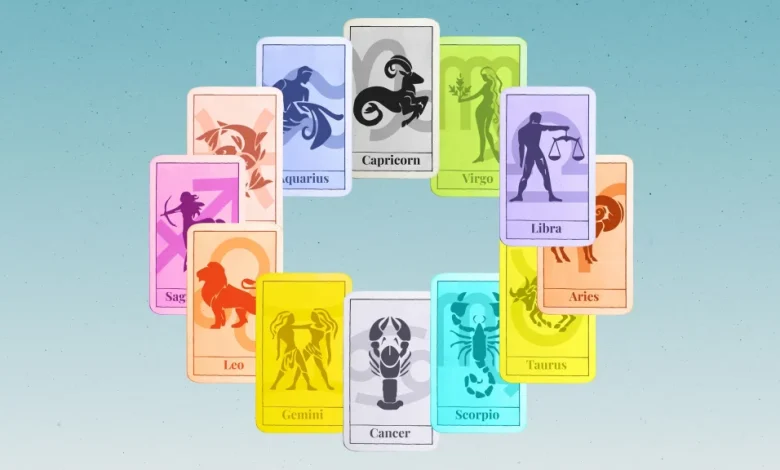
Historical Origins: Western vs. Vedic Systems
The practice of astrology is not monolithic. It is primarily divided into two dominant systems that, while sharing a common ancestry, diverge significantly in calculation and philosophy.
Western Astrology (Tropical Zodiac)
Rooted in the traditions of Hellenistic Egypt and Babylon (c. 2nd Millennium BCE), Western astrology utilizes the Tropical Zodiac. This system is aligned with the Earth’s seasons, fixing the start of Aries to the Vernal Equinox. Consequently, it focuses heavily on psychological development, personality archetypes, and the solar journey (the “Hero’s Journey”).
Vedic Astrology (Sidereal Zodiac)
Known traditionally as Jyotish (the “Science of Light”), Vedic astrology originated in ancient India over 5,000 years ago. Unlike its Western counterpart, it employs the Sidereal Zodiac, which accounts for the precession of the equinoxes. This aligns the signs with the actual visible constellations. Vedic astrology is often considered more predictive and deterministic, focusing on Karma (action) and Dharma (cosmic law).
| Feature | Western Astrology | Vedic Astrology (Jyotish) |
|---|---|---|
| Zodiac System | Tropical (Seasonal) | Sidereal (Constellational) |
| Primary Focus | Psychological Growth & Personality | Karmic Patterns & Predictive Timing |
| Calculation Basis | Sun-Earth Relationship | Fixed Stars & Moon (Nakshatras) |
The Psychology of Belief: The Barnum Effect
From a scientific perspective, the widespread acceptance of horoscope accuracy is often attributed to the Barnum Effect (also known as the Forer Effect). This cognitive bias describes the tendency of individuals to accept vague, general personality descriptions as uniquely applicable to themselves.
The 1948 Forer Experiment
In a classic 1948 study, psychologist Bertram R. Forer administered a personality test to his students. Regardless of their answers, he gave every student the exact same evaluation, which included statements such as:
“You have a great need for other people to like and admire you… You have a tendency to be critical of yourself… Security is one of your major goals in life.”
Students rated the accuracy of this generic profile at an average of 4.26 out of 5. This phenomenon, reinforced by confirmation bias, explains why “Pop Astrology” horoscopes often feel eerily accurate to a wide audience.
Technical Mechanics: Elements and Modalities
Professional astrologers analyze a chart based on a rigid system of classification. The twelve zodiac signs are not random; they are categorized by Element (substance) and Modality (action).
The Four Elements
- Fire (Aries, Leo, Sagittarius): Associated with energy, enthusiasm, and action.
- Earth (Taurus, Virgo, Capricorn): Represents practicality, stability, and material concerns.
- Air (Gemini, Libra, Aquarius): Linked to intellect, communication, and social connection.
- Water (Cancer, Scorpio, Pisces): Governs emotion, intuition, and subconscious depth.
The Three Modalities
- Cardinal: Initiators of action (marks the start of a season).
- Fixed: Sustainers and stabilizers (middle of a season).
- Mutable: Adaptable change-makers (end of a season).
Industry Trends 2025-2026
The astrology industry is undergoing a significant transformation, moving away from newspaper columns toward data-driven, hyper-personalized experiences.
The Rise of AI Astrologers
By 2026, applications utilizing Large Language Models (LLMs) are synthesizing complex planetary data (transits, progressions, profections) to generate instant, detailed readings that rival human interpretation in technical accuracy, if not intuition.
Planetary Shifts
Key astrological events shaping the current zeitgeist include:
- Pluto in Aquarius: A generation-defining transit (2024-2044) associated with radical technological advancement, decentralization, and the restructuring of societal power dynamics.
- Saturn in Aries (2025-2028): A cycle emphasizing individual responsibility, leadership, and the restructuring of personal identity.
Professional Standards and Entities
Contrary to the “wild west” of social media influencers, professional astrology is governed by ethical standards and certification bodies. Authoritative organizations include:
- ISAR (International Society for Astrological Research)
- NCGR (National Council for Geocosmic Research)
- AFA (American Federation of Astrologers)
- OPA (Organization for Professional Astrology)
These entities ensure that practitioners adhere to rigorous study, often requiring exams on calculation, forecasting, and counseling ethics.
Sources & References
- •
Bertram R. Forer, ‘The Fallacy of Personal Validation: A Classroom Demonstration of Gullibility’, Journal of Abnormal and Social Psychology, 1949. - •
International Society for Astrological Research (ISAR) – Certification Standards. - •
National Council for Geocosmic Research (NCGR) – Education Curriculum. - •
American Federation of Astrologers (AFA) – History of Astrology. - •
Ptolemy, ‘Tetrabiblos’ – Foundational Text of Western Astrology.