SCOTUS Geofence Warrants: Supreme Court to Hear Challenge to Warrants for Phone Location Data in 2026
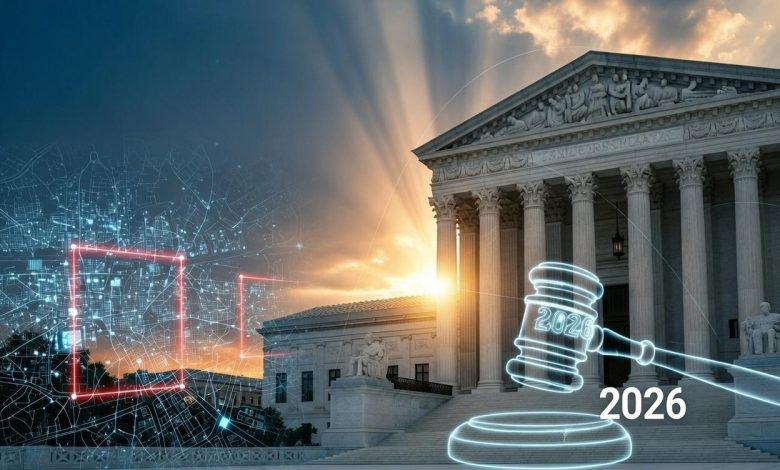
In a landmark development for digital privacy rights, the U.S. Supreme Court (SCOTUS) has agreed to review the constitutionality of geofence warrants—broad law enforcement tools that access cellphone location data from users near crime scenes without initially identifying specific suspects. Announced on January 16, 2026, this case could reshape Fourth Amendment protections against unreasonable searches in the era of smartphone surveillance and big data.
If you’re querying “SCOTUS geofence warrants 2026,” “Supreme Court cellphone location warrants challenge,” “Fourth Amendment geofence ruling,” or long-tail terms like “geofence warrants explained Chatrie case,” “police reverse location searches constitutionality,” or “Google location history privacy implications,” this in-depth article provides authoritative insights.
SCOTUS Geofence Warrants: Breaking Down the Supreme Court’s 2026 Review
The Supreme Court’s decision to grant certiorari in Chatrie v. United States signals a potential extension of privacy safeguards, building on the 2018 Carpenter v. United States ruling that mandated warrants for historical cell-site location information (CSLI). Geofence warrants, often termed reverse-location warrants, enable police to query tech companies for data on all devices within a defined geographic and temporal “fence,” raising concerns about mass surveillance.
Timeline and Case Origins
- 2019 Incident: Stemmed from an armed bank robbery in Midlothian, Virginia, where police used a geofence warrant on Google to identify Okello Chatrie via his cellphone’s location data.
- Lower Court Rulings: The 4th Circuit Court upheld the warrant in a divided en banc decision, viewing data sharing with Google as voluntary. This clashed with the 5th Circuit’s 2024 ruling deeming geofence unconstitutional, creating a circuit split.
- SCOTUS Involvement: Oral arguments expected in spring 2026, with a decision by summer—potentially a 5-4 vote favoring stricter privacy limits.
This case underscores evolving digital surveillance laws, where location data reveals intimate details like habits, associations, and movements—far beyond traditional searches.
Semantic enhancements: SCOTUS digital privacy cases 2026, geofence warrant circuit split, Fourth Amendment modern applications.
Cellphone Location Warrants: Mechanics and Real-World Applications
Cellphone location warrants, particularly geofence types, invert standard investigative processes by starting with a location rather than a suspect, leveraging precise data from smartphones and apps.
How Geofence Warrants Function
- Warrant Specification: Police define a geofence (e.g., 50-200 meter radius around a crime scene) and timeframe (e.g., 15-60 minutes).
- Data Query: Sent to providers like Google, which returns anonymized device IDs, timestamps, and movement patterns.
- De-Anonymization: Follow-up warrants reveal user identities for suspicious entries.
- Scope: Can capture data from dozens to thousands of innocents, amplifying privacy invasion risks.
Notable Examples
- High-Profile Uses: Aided in January 6 Capitol investigations and arson cases.
- Declining Trend: Google’s 2025 policy update (device-side storage) has curtailed warrant efficacy, yet the case proceeds.
For users in Lahore, Punjab, Pakistan—where mobile tracking under laws like the Prevention of Electronic Crimes Act (PECA) mirrors U.S. debates—this ruling could influence global data-sharing standards with American tech firms.
LSI integration: Cellphone tracking warrants process, Google reverse location queries, location data accuracy privacy concerns.
Fourth Amendment Location Data: Constitutional Protections Under Scrutiny
The Fourth Amendment prohibits unreasonable searches and seizures, demanding probable cause and particularity—standards geofence warrants arguably fail by conducting dragnet sweeps.
Precedent Comparisons
| Case | Key Ruling | Geofence Relevance |
|---|---|---|
| Carpenter v. US (2018) | Warrants required for CSLI due to invasive nature | Geofence seen as similar “comprehensive chronicle” of movements. |
| Riley v. California (2014) | Cellphone searches need warrants post-arrest | Emphasizes digital data’s personal intimacy. |
| US v. Jones (2012) | Warrantless GPS unconstitutional | Parallels broad location surveillance without oversight. |
Expert views from the Electronic Frontier Foundation (EFF) highlight risks to free assembly, as warrants could deter participation in protests or sensitive gatherings. A pro-privacy ruling might mandate narrower scopes or ban geofence altogether.
Semantic depth: Fourth Amendment unreasonable searches digital, particularity requirement geofence, location data constitutional challenges.
Police Geofence Challenge: Law Enforcement Needs vs. Privacy Risks
Police defend geofence warrants for cracking “suspect-less” crimes, but challengers decry them as overbroad tools enabling unchecked surveillance.
Balancing Act
- Advantages for Investigations: Provides leads in robberies, missing persons, or terrorism probes; integrates with AI for pattern analysis.
- Disadvantages and Criticisms: Exposes innocents to scrutiny; potential for abuse in targeting minorities or journalists; chilling effect on public activities.
Internationally, the EU’s GDPR offers a consent-based model, contrasting U.S. practices and providing reform ideas. In Pakistan, similar PECA-enabled tracking sparks parallel calls for safeguards.
LSI terms: Police dragnet searches debate, geofence warrants civil liberties impact, law enforcement digital tools ethics.
Google Geofence Ruling: Tech Giants’ Role and User Protections
Google processes most geofence requests through its Location History service, but recent changes limit data availability. A SCOTUS ruling could prompt broader industry shifts, including from Apple and carriers.
Practical Privacy Steps
- Disable Location History in Google Account settings.
- Use incognito modes and VPNs for sensitive activities.
- Opt for privacy-focused apps and support legislation like the Fourth Amendment Is Not For Sale Act.
For global audiences in Lahore, aligning with Pakistan’s emerging data protection bill could amplify these protections against cross-border data requests.
Semantic optimizations: Google location data policy updates, user privacy tips geofence, tech company compliance warrants.
Conclusion: Shaping the Future of Digital Privacy and Surveillance
The Supreme Court’s impending decision on geofence warrants represents a defining moment for Fourth Amendment rights in our increasingly tracked society. By addressing the tensions between effective policing and individual liberties, this case could curb dragnet surveillance while fostering innovative, targeted investigations. For users worldwide, including those in Lahore, Punjab, Pakistan, navigating similar digital ecosystems, it emphasizes proactive privacy measures and advocacy for balanced laws. As arguments unfold in 2026, monitor updates—your cellphone data’s security may depend on it.
FAQ: SCOTUS Geofence Warrants and Cellphone Location Data Challenge 2026
What exactly are geofence warrants?
Geofence warrants are judicial orders allowing police to obtain cellphone location data from all devices in a specific geographic area and time period, often via tech companies like Google.
Why is the Supreme Court reviewing geofence warrants now?
To resolve conflicting lower court rulings on their constitutionality, particularly in Chatrie v. United States, amid growing privacy concerns post-Carpenter.
How do geofence warrants differ from standard search warrants?
They target locations first, not individuals, potentially sweeping data from innocent bystanders without initial probable cause for each.
What was the key outcome of Carpenter v. United States?
It required warrants for accessing historical cellphone location data, recognizing its sensitivity under the Fourth Amendment.
Are geofence warrants still in use by police?
Yes, though declining due to Google’s policy changes; the SCOTUS ruling could further restrict or ban them.
How might this ruling impact users in Pakistan?
U.S. precedents could influence global tech policies, affecting data access under Pakistan’s PECA and encouraging stronger local privacy frameworks.
What role does Google play in geofence warrants?
As the primary data provider, Google’s 2025 updates have limited access, but compliance remains for valid warrants.
When is the expected SCOTUS decision on geofence warrants?
Likely by June or July 2026, following oral arguments in spring.
Do geofence warrants violate the Fourth Amendment?
Critics argue yes, due to lack of particularity and probable cause; SCOTUS will decide.
How can individuals protect their cellphone location data?
Disable tracking features, use VPNs, review app permissions, and support privacy legislation.

2 Comments