The Labubu Phenomenon: An Economic and Cultural Analysis of Pop Mart’s Viral Icon
Executive Summary
The global designer toy market has witnessed a seismic shift in 2024, driven largely by a serrated-toothed elf named Labubu. Originally created by artist Kasing Lung as part of “The Monsters” series, this character has transcended the niche boundaries of blind box collecting to become a mainstream cultural and economic asset. This report analyzes the trajectory of the Labubu craze, examining the interplay between celebrity influence, scarcity marketing, and the psychological mechanics of the blind box economy. We explore how Pop Mart successfully pivoted from a regional toy distributor to a global IP powerhouse and provide a comparative analysis of Labubu against market competitors. Ideally suited for investors, collectors, and brand strategists, this guide dissects the longevity of the trend and the realities of the secondary resale market.
The Genesis of The Monsters
The story of Labubu begins not in a corporate boardroom, but in the sketchbooks of Hong Kong-born, Belgium-raised artist Kasing Lung. In 2015, Lung introduced “The Monsters,” a universe of characters inspired by Nordic mythology. Unlike the typically cute or heroic figures dominating the toy market, Labubu was designed with distinct quirks: a mischievous grin, serrated teeth, and rabbit-like ears. This aesthetic friction—simultaneously endearing and slightly unsettled—is central to the character’s appeal.
Lung signed an exclusive licensing agreement with Pop Mart in 2019, a strategic move that transitioned the character from limited-run vinyl art pieces to mass-market blind boxes. This democratization of ownership allowed the character to penetrate the Asian market rapidly. However, the artistic integrity remained intact, with Lung maintaining creative control over the expanding lore of the elf community.
The Lisa Effect and Social Viralism
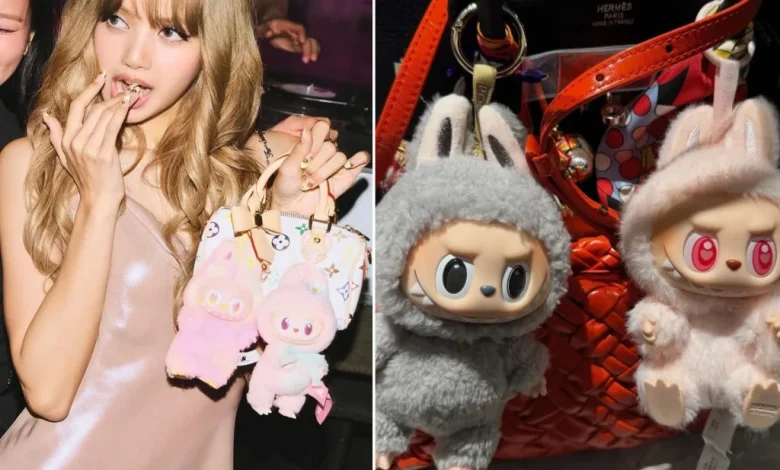
While the character enjoyed steady popularity among art toy enthusiasts for years, the hyperbolic demand seen in 2024 can be directly attributed to the “Lisa Effect.” Lisa Manobal of the K-pop group Blackpink posted images of herself accessorizing with the Labubu Macaron series on Instagram. This endorsement acted as a catalyst, instantly validating the toy as a high-fashion accessory rather than a mere collectible.
The impact was immediate across Southeast Asia, specifically in Thailand, where demand outstripped supply by significant margins. TikTok algorithms further amplified the trend, with unboxing videos and “bag charm” styling tutorials garnering millions of views. The social signal sent by owning a Labubu shifted from “toy collector” to “trend-aware fashion consumer,” broadening the total addressable market significantly.
The Economics of Blind Box Scarcity
Pop Mart utilizes a sophisticated scarcity model that blends the dopamine loop of gambling with the tangibility of retail. The “blind box” mechanic ensures that consumers do not know which specific variant they are purchasing. This uncertainty creates two distinct economic behaviors: volume purchasing (buying whole cases to guarantee a set) and secondary market speculation.
Included in these series are “Secret” or “Chase” figures, which typically appear at a ratio of 1:144. The presence of these rare items artificially inflates the value of sealed boxes. Economically, this mirrors the mechanics of trading cards but applies it to 3D art assets. The emotional return on investment (ROI) of opening a box drives repeat purchases, while the financial ROI of finding a secret figure sustains the scalper economy.
Comparative Market Analysis
To understand Labubu’s current market position, it is necessary to compare it with other stalwarts of the designer toy industry.
| Metric | Labubu (Pop Mart) | Bearbrick (Medicom) | Sonny Angel (Dreams) |
|---|---|---|---|
| Primary Appeal | Character Personality & Fashion | Canvas for Collaboration | Nostalgia & Kitsch |
| Price Point (Retail) | Mid-Range ($15 – $20) | High-End ($50 – $1000+) | Entry-Level ($10 – $12) |
| Market Volatility | High (Currently Trending) | Stable (Blue Chip) | Moderate |
| Target Demographics | Gen Z, Fashion Enthusiasts | Streetwear & Art Collectors | Casual Collectors |
| Key Utility | Bag Charm / Accessory | Home Decor / Art Piece | Desk Companion |
Resale Dynamics and Investment Viability
The secondary market for Labubu figures has seen premiums ranging from 300% to 1000% over retail price, particularly for the “The Monsters – Tasty Macarons” series. Unlike Bearbricks, which often retain value due to limited collaborations with luxury brands like Chanel or KAWS, Labubu’s current value is driven by hype cycles.
Investors should approach with caution. While “Secret” chasers will likely hold value due to genuine scarcity, standard figures are susceptible to market corrections once the fashion trend cycle moves on. However, Pop Mart’s expansion into the United States and Europe suggests they are attempting to stabilize the brand’s long-term value by geographically diversifying the fanbase.
Authentication and Counterfeit Protection
With high resale values comes a flood of counterfeits. For professional collectors, distinguishing authentic Pop Mart products is essential. High-quality fakes, often termed “1:1 replicas,” have infiltrated platforms like eBay and Shopee.
Authentic Labubu boxes feature a specific holographic foil stamp and a scannable QR code that links directly to the Pop Mart verification server. Physically, collectors should inspect the feet of the figure; authentic molds have crisp, clearly embossed copyright text (e.g., © Kasing Lung). Counterfeits often feature smudged logos or incorrect font weights on the accompanying identity cards. Furthermore, the paint application on the serrated teeth is a tell-tale sign; genuine figures have sharp, precise separation lines, whereas fakes often show bleeding paint.
Future Outlook
Labubu represents a case study in modern IP management, where character design intersects with influencer culture. As Pop Mart continues to open brick-and-mortar locations globally, the character acts as the tip of the spear for Asian art toys entering the Western consciousness. While the fever pitch of 2024 may cool, the character has successfully cemented itself as a cultural icon of the 2020s.